
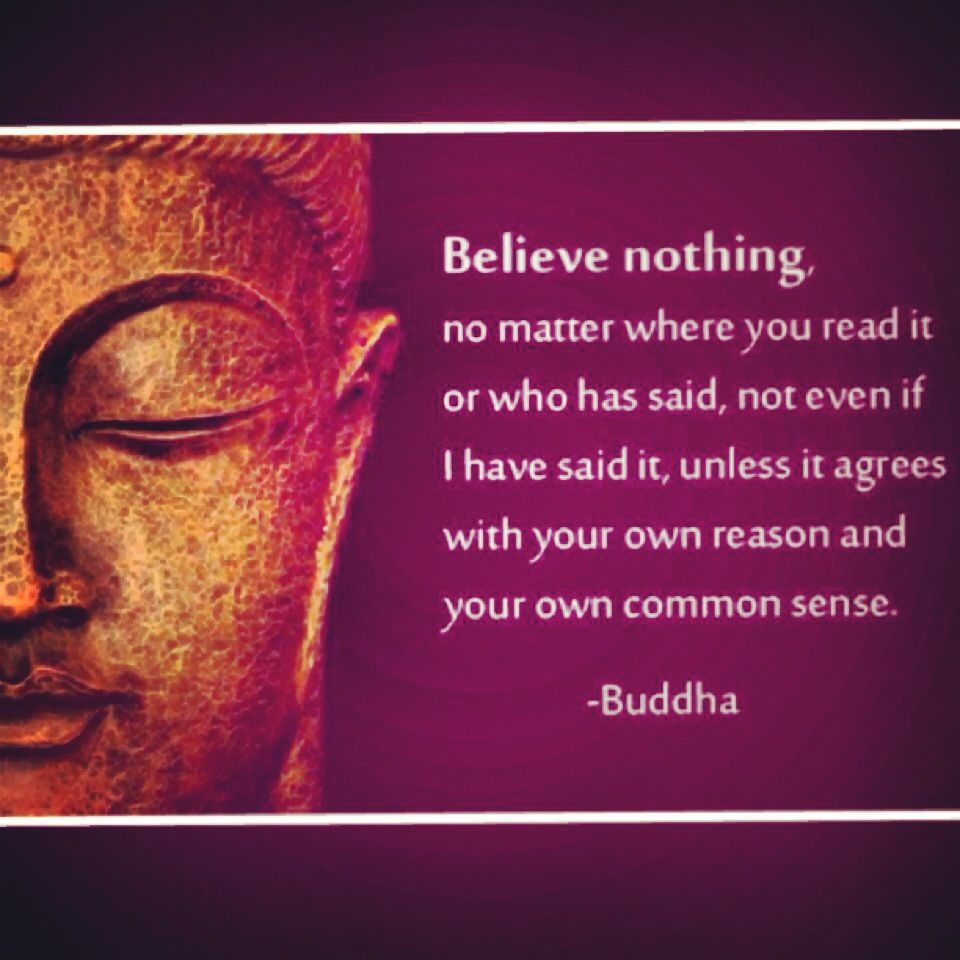
All the major religions in the world have many sects; some of which are violent in that they use coercions in deed and word to force others to agree with them and be like them, hence imposing their belief system on others. Typically, the religious institutions see each other as enemies due to differences in their doctrines. Each is so certain their doctrines are perfectly correct which directly/indirectly accuses the other sects/religions to have wrong views whenever there are differences. Each becomes defensive and angry at the thought like this: “the other sects/religions MAY be accusing us of preaching the wrong doctrines, and their evil intention MAY be such as to steal our followers away from us; if one is not with us, he is against us.” They don’t care to find out whether such accusation is actually spoken or such evil intention does exist. The indirect implication (of the differences) alone is sufficient to hate the other sects/religions and wish them to be annihilated. In some countries, there are anti-blasphemy and anti-proselytization laws to protect the religion which desperately need protections. It is an open admission that the religion is so weak and may crumble if people are allowed to criticize the doctrines and attempt to convert someone from the religion to another; the laws are actually blasphemous against the religion. It exhibits moral bankruptcy and the lack of confidence for the religion. However, the presence of such delusion or stupidity does not necessarily mean the religion is bad. Religions reject no one; therefore, no one should reject any religion. It is the religious institutions and believers which are rejecting other religions and people of other religions. The act of rejecting religions simply means denying freedom of speech and expression. I am a believer of all religions in the sense that I accept all the doctrines; none are wrong, although some are not right, but that’s OK. However, it is impossible to apply or agree with all the doctrines of all religions (at the same time and space) for my happiness and wellbeing because there are contradictions between the religions. No religious institutions will accept me as their believer. They indirectly make me a believer of no religion simply because I don’t totally agree with a particular religion. They want all or nothing at all of me.
“Governing a big country should be like cooking a small fish. Applying Dao in governing the world, evil tricks will not become accepted belief or practices. Not only the ghost will not become god, the existence of god will not harm other people. Not only the god will not harm other people, the Sage also will not harm anybody or disapprove the belief. Because both the Sage and the god do not harm anybody, therefore the benevolence of each can interplay and contribute to the happiness of the people (治大国若烹小鲜 以道莅天下 其鬼不神 非其鬼不神也 其神不伤人也 非其神不伤人也 圣人亦弗伤也 夫两不相伤 故德交归焉).” If the people are educated to have open minds and critical thinking, they will not hinder freedom of speech and freedom of religion, and at the same time, they will not blindly believe anybody because they know there are a lot of lies and fake news around. Evil teaching cannot become popular. Religious teaching will not become controlling and intrude the personal lives of the people. So long as religious bodies do not brainwash the followers to harm other people, the government should allow them to exist. Religions can be good and bring happiness to some people. Whoever follows misguided ways, not abandoning greed, hatred and delusion, he will continue to be troubled by mental suffering and feel unhappy with his life. He shall reap what he sows.
The Buddha said: “Believe nothing, no matter where you read it or who has said, not even if I have said it, unless it agrees with your own reasoning and you test it, experience and confirm the happiness which it brings to yourself and others.” I can’t test, experience and confirm the concept of rebirth and preventing rebirth. I can’t confirm the existence of Heaven and Hell, or Devas and God. Nevertheless, I love all the other Dhamma spoken by the Buddha; they are all very useful for my happiness and wellbeing here and now. After all, speculation or delusions about the afterlife, greedy for the rewards, or aversion of the dislike, or fear of the unknown in the future, are all not encouraged by the Buddha. We should concentrate on the present moment; annihilate and abolish lust, hatred, and delusion. Abhor and prevent ourselves from the misconduct in deed, word and thought. Cherish good conduct in deed, word and thought.
As a professor of Electrical Engineering, I always tell my students that the Circuit Theories which I teach are not right but very useful so long as they are applied in the analysis of circuits which operate at low frequencies. It is likely that many doctrines of various religions are not right. However, it doesn’t stop any religion from being useful, albeit the limitations at certain time and space. Preaching about the afterlife can be useful too. Moral conduct, charity, and spiritual development will enhance our happiness here and now if we do it right; the benefits in the afterlife as promised by the preachers will be extra bonuses if any of them comes forth. We lose nothing; nothing belongs to us, anyway. If we don’t expect perfection, nothing is really bad. Everything is impermanent, including good time and bad time. Good time will come after bad time, and vice versa. Bad time will be over in due time.
In the original teaching of the Buddha, the objective and profit of moral conducts are to eventually lead to liberation of the self. “Good conducts lead to freedom from remorse, which then leads to joy, delight, calm, happiness, concentration, knowing and seeing things as they really are, dispassion, and finally the direct knowledge and vision of liberation.” – Anguttara Nikaya 10.1. What we see today is many “generous” people do charity simply because it is a fashionable thing to do, for fame (to be known as a philanthropist) and avoid disparage (as an ungenerous man), or for the prospects of something to gain in this life or later (i.e. greed or craving). Religious institutions start to preach about generosity (Dana) for the interest of others more than moral conducts (Sila) for self-good and self-interest. They preach about praying in order to receive magnanimous “protections and material benefits” from past-away Bodhisattva more than personal accountability (i.e. whatever actions a person does, good or evil, of those he shall receive the fruitions). They start to think they are greater than the Buddha simply because they have much more compassion for the people, vowing to be a Bodhisattva forever and never enter nirvana (or exit the round of rebirth) like the Buddha until and unless the Hell becomes empty. They start to think of compassion as the most precious thing more invaluable than the original Dhamma of the Buddha. Unsurprisingly, common people crave for compassion, as much as everything else; but common view is not the Right View, and it is the root cause of suffering to themselves and others. Good Dhamma is extraordinary and not common; it would be nothing special if everybody can accept it, and not being accepted by common people precisely proves its subtleness. The compassion of the Buddha is in teaching the people to annihilate and abolish craving, including craving for compassion. Idolizing compassion as a precious thing is contradictory to the original Dhamma of the Buddha. Nevertheless, using a marketing tactic which entices the common people with Bodhisattva kind of compassion mentioned above, which the people crave for, is not necessarily wrong although it is not right. “If you want it, here it is, come and get it. But you’d better hurry because it’s going fast.” It is useful in catching the attention and attracting the common people to start having affinity to the religion and finally become attached to the Dhamma (守). Some of those may then be taught the true Dhamma which helps them to annihilate greed, hatred and delusion (破); finally, abolish all attachments (including attachment to the Dhamma and self identification) and become truly emancipated/liberated (离). Don’t carry the boat on your shoulder after you have crossed the river. Greedy for more followers and lavish temples, and greedy for worldly merits (福德) from “generosity” instead of pure merits (功德) from spiritual development, will not bring cessation of suffering.
Common people crave for selfless individuals to sacrifice themselves for the benefits of the people. Therefore, they think this kind of “selflessness” is precious and should be encouraged so long as it is supplied by others instead of themselves. Common people revere heroes who are men of actions; therefore, there is no shortage of individuals who wish to become heroes so that they are revered by the people. It is a craving for fame. Many of those heroes do things for the sack of doing. They simply assume they know what they are doing although they are not certain about the possible outcomes; yet they are blindly confident. Evidently, many human actions caused disasters. These heroes might have solved some problems but, at the same time, they created new problems. Anyway, epidemics and pandemics are not necessarily bad because these can lead to human progress. Black Death with massive death tolls led directly or indirectly to the Renaissance. Dynasties were destroyed, but then new dynasties arose. People disliked the disruption, but then they adapted. It’s OK to do it, if you are able and happy to do it, with good conduct in deed, word and thought. Think not it has to be you instead of someone else to save the day; and think not it will be the end of the world if you don’t do it. It’s OK not to do it; it makes no different if you take an overall view instead of localize or narrow view (in time and space). The immediate outcomes will be different, but none are bad; there are delayed gratifications from doing and also not doing. That’s OK. The world will not end, and human will not become extinct before a second sun comes near the current one. Have no fear, obligation and guilt.
The Buddha encourages selflessness which benefits the “selfish” interest of the self and also others. The “selfish” interest of being selfless is to have no attachment to the self, see the body as not self, thus liberated. When you have no self, or stop cognizing the body as the self, you will have no fear because nothing can harm the real you (which is not the body and not inside the body). The greatest selfishness is selflessness. Provide for the “selfish” interest of others by showing a good example and motivates them to cultivate themselves spiritually so that they can also achieve liberation. Purposely harming yourself to benefit others, because you have been brainwashed to do so, is a delusion or stupidity. However, if you die (i.e. your body breaks away or stop functioning) because it is unavoidable, that’s OK. Think not why it has to be you instead of someone else.
Cross the flood to reach the other shore by destructing delight for existence and ceasing all feeling, perception, volition, and consciousness. Don’t standstill nor strive too hard, because you will sink to the bottom if you standstill but you will be swept away if you struggle and not finding firm footing. Craving for non-existence is also an undesirable desire.
 RESILIENT KID