Name and Nameless 有和无

Table-of-Content

My mother fell in love with Buddhism when I was a teen. She attended Buddhism classes and seminars regularly. She loves it so much because she found the peace of mind that she had never felt before. I was happy for her. Her peacefulness and happiness also brought greater peace and happiness to the family. It benefited me.


My mother did not push me and my siblings to attend Buddhism classes. She would bring back some Buddhism books and told us what she learned from the monks. I got interested and read the books to understand the religion. I learned many useful knowledge and wisdoms. That was another big benefit I got, although I did not suddenly achieve enlightenment.


I wasn’t a good student. In my first year of secondary school, when I was 13, I didn’t know how to spell “Kuala Lumpur”. My classmate laughed at me, and I was so embarrassed. When I was 17, I answered a question in the Chinese language examination paper to discuss Confucius’s assertion of “Don’t do unto others what you don’t want others to do unto you” (己所不欲 勿施于人) from the Analects (论语). I wrote an essay about “Don’t give to others what you don’t want”. My teacher gave me zero mark because my interpretation of the proverb was incorrect. I was very grateful to the teacher instead of feeling angry. I felt grateful because he considered and reconsidered for more than a week to finally decide that I should get no mark at all. Some people might think he was too strict and heartless, but I felt he wanted to help me but finally decided to do the “right thing”. I could feel the love although I get zero mark finally. I got what I deserved, and I fell in love with Confucianism, Chinese history and other Chinese philosophies. My teacher expanded the emptiness (空和无) in my brain, or awareness of my emptiness, to accept and accommodate so many things that are great to have. I am still very grateful to my teacher until today. Emptiness is a great thing.


The sea (the king of all valleys) can become so big because it stays low to receive the water from hundreds of rivers, regardless of the water quality. We can learn from the sea: to be humble, receive knowledge from various sources, apply the useful ideas from all schools of thoughts, keep an open mind and listen to different opinions regardless of whether we agree or disagree with the ideas (江海所以能为百谷王, 以其善下之, 故能为百谷王).


There was a famous Zen monk (南隐) in Japan. A university professor wanted to ask him about Zen. The monk poured tea into a cup for the professor, but he continued although the cup was full and the tea spilled over. The professor watched what happened for a while. Finally, he suggested the monk to stop pouring because the cup was full. The monk said: “Your heart is like the cup. It is filled with your perceptions and opinions. If you don’t empty the cup, how can I start telling you about Zen?” The cup is a material (色和有), while the empty space in the cup is nonmaterial (空和无). The material and nonmaterial are actually one entity; both must exist together to make it a cup. The empty space is an indispensable “part” to make the cup useful.


I have met many students who felt they already know enough of what they need to know about life, and they don’t have to read another book. I can only pity them and wish them all the best. We like to hope that everything goes well in our lives. Unfortunately, hope is a very ineffective strategy. In life, 8 to 9 out of 10 hopes will not materialize (人生不如意事 十常八九). If we don’t recognize this reality, but wish the reality is what we want to see, we will feel disappointed every time our hope doesn’t come true. Conversely, if we believe the proverb is true, we would be mentally ready whenever the going gets tough, and we will be tough enough to get going. We accept that it is so normal to face tough time again and again in our lives, and we will not feel disappointed even if we fail to overcome the tough time. It will be nothing more than failing to win a jackpot or lottery; it is no cause for disappointment. Unlucky is a norm; feeling unhappy with the norm means unhappy will be a norm. Even if the proverb is not true, only 5 or 6 out of 10 hopes will not materialize, we will feel very happy and very grateful to be so lucky and so blessed that we have 3 extra hopes which come true. It is really a kind of intelligent. Many people knew or heard of the proverb but few have the intelligent to recognize that life is more of a challenge to us and less as a gift. Another important Chinese proverb is: “A dignified person will strive to be self-reliant and strong, and never give up” (《周易·乾》:天行健,君子以自强不息), from Yi Jing. It is ingrained in the mind of Chinese people and become an integral element of Chinese culture. It makes some people enjoy facing challenges and not complain about tough time.


We need to have intelligent and knowledge to overcome tough time. Hence, we need to keep learning. The kind of intelligent I refer to here is the philosophical-intelligent to live our lives to the fullest, and make us free of suffering from self-inflicted mental issues (般若 prajna: wisdom/insight in the true nature of reality. 般若波羅蜜多 Prajnaparamita: the perfection of wisdom). Everybody can attain the philosophical-intelligent if he is ready and willing to learn. It is useful to us but useless to our bosses, because I am not talking about the kind of intelligent that is meant to be sold for a price.
 

There are “good” and “bad” in everything

Table-of-Content

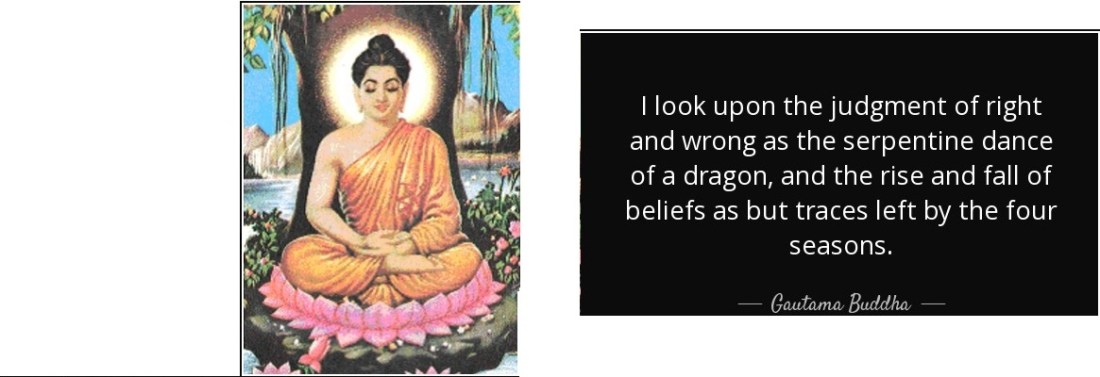
There are “good” and “bad” in everything. The classifications of “good” and “bad” are all man made (伪). They make us view reality as being divided in a binary manner, which of course is inaccurate. We can always learn something from the “good things” as well as the “bad things” if we keep an open mind rather than being fixated on one school of thoughts, thinking that we are right and others are wrong. Nothing is absolutely right and nothing is absolutely wrong, but a diverse of things can be not-wrong at the same time, and a diverse of things can be not-right at the same time. There may be various ways to reach the same logical conclusion. Not-wrong doesn’t mean it is right, not-right doesn’t mean it is wrong. We should be happy to be not wrong and not right, lest we will be tortured by the desire to be “right” or suffering due to misconception that we are in a “wrong” position. To have a better understanding of any matter, seek to know the “good” and “bad” of it, and how to turn the “bad” into “good” use, and prevent the “good” from being twisted as something “bad” to discourage us.


World War II caused undesirable disruption to the world; it was unpleasant, but the Nature quickly recovered to a new state (which is stronger in one way and more unstable in another way). We are grateful for a more comfortable life and better equality worldwide today, but at the same time we wish World War II never had happened. The debates of right and wrong, good and bad, will never end. Conventional classification of things into kinds according to their typical human uses, in the ordinary vocabulary, will not give an accurate understanding of the things. “Peace is not an absence of war, it is a virtue, a state of mind, a disposition for benevolence, confidence, justice.” – Baruch Spinoza.


Many people are afraid to say politically-incorrect words, because saying them is not popular; but politically-incorrect doesn’t necessarily mean it is wrong. There are many politically-incorrect ideas in this blog; including wanting to be not-right. Wanting to be right is arrogant. Many people will say I am not right. However, since I don’t want to be  right, so that’s OK, as long as I am not breaking any laws of the land.


Zhang Liang (张良) (250-186 BC) was the most important strategist who helped Liu Bang to topple the Qin dynasty and established the Han dynasty (after which he soon retired and became a practitioner of Daoism). Before he joined the forces of Liu Bang, he was a rebel himself against Qin’s rule to seek revenge for the destruction of his family and State. He failed in an assassination attempt to kill Qin Shi Huang and went into hiding. One day, when he was walking near a bridge at Xia Pi, an old man suddenly took off his shoe and dropped it under the bridge. He then said to Zhang Liang: “Young man, go down and fetch the shoe for me.” Zhang Liang was dumbfounded. However, he controlled his emotion because he sensed something unusual about the old man. Without saying a word, he went down to fetch the shoe. The old man then said: “Put it on for me.” Zhang Liang complied. The old man then went away with a laugh. After going some distance, the old man turned back and said: “You can be taught, young man! Meet me here five days from now at dawn.” Zhang Liang’s curiosity was aroused, and he knelt down and answered: “I will.” Five days later, Zhang Liang went back to the bridge at dawn. However, the old man was already there waiting for him. The old man said angrily: “Why are you late for appointment with an old man? Come earlier five days from now.” With that he left. This time Zhang Liang got up early, but still the old man was earlier than him. The old man was angry and said: “Late again. Come earlier five days from now.” With that again he left. In the third time, Zhang Liang got up at midnight and went to wait at the bridge. The old man came shortly. He said approvingly: “That’s right.” He took out a book and said: “Read this book and you will become the teacher of a king. Ten years from now you will become a hugely successful person. Thirteen years from now you will see me again as a yellow rock at the foot of Mount Gu Cheng, north of the River Ji.” Without another word he left and did not appear again. The book was The Art of War of Jiang Tai Gong (太公兵法) (which was a collection of answers by Jiang Tai Gong to the military questions from the founding King of Zhou dynasty). He read it again and again. After the establishment of the Han dynasty, Liu Bang said: “Zhang Liang was able to help me win a war from a thousand miles away from the enemy. He is one of the Three Pillars of my victory, along with Han Xin, the grand-general of Han forces and Xiao He, the first chancellor of the Han dynasty.” The old man would not have given the book to Zhang Liang if he couldn’t pass the test. He would not be the right student if he couldn’t sense the good intention of the special old man who wanted to teach him something. An extraordinary book is meant for an uncommon person.

Each of us has a role to play, and that role is to live happily

Table-of-Content

What is not-wrong to do is to grow our happiness. The politically-incorrect word is self-interest or selfishness. However, it is insane to promote selfishness directly because many people will start to focus on immediate gains that are limited in time and space. They may feel the thrill and fulfillment here and now without careful thinking of their future and the dangers they created elsewhere which may come back to haunt them in another form. It is called Karma in theology; in Science, it is called Newton’s third law: for every action, there is an equal and opposite reaction, and sometime the reaction come in a roundabout way; hence, the need for religious teachings. Atheists may be more dangerous than religious believers in doing harms to themselves and to others, especially those who don’t believe in humanity but crazy for absolute authority. They are “free thinkers” but they think of themselves first and foremost, and they want to be free to do anything they want. They don’t think there is any perspective or opinion that they can accept as the truth (空). Hitler and Stalin were Atheists, and they killed more people than anybody else in the world history.


Initiating or threatening the use of any and all forcible interference on an individual or individual’s property is not just a selfish act but also full of greed. If you steal or have no respect for private property (including the body of another person); you will naturally feel worry about being caught or becoming a victim at another point of time. Greed is incompatible with the goal of maximizing self-interest. Being selfish is not wrong, but being greedy which will erode your mental health, hence your holistic happiness, is wrong. Maximizing freedom without justice will lead to no freedom; maximizing justice without freedom will lead to no justice. But where there is a lot of justice (self-regulation), there can be a lot of freedom. Where there is a lot of proton, there can be equal amount of electron. Selfless (therefore no body and no desire) is the path to the greatest selfishness (大私无私). When you have no more self, you will have no more fear. (及吾无身,吾有何患﹖)


We are all virtually connected, although we are separated. Each and every one of us is like a hair on the same skin. Some people think it is OK to remove one hair to save the world/skin. If one hair is not enough, what about a hundred or a thousand since “we” have many more (as if “we” own the world/skin)? On the other hand, what every one of us does may affect the world/skin. If the effect of one person is insignificant, what about a hundred or a thousand? Each of us has a role to play, and that role is to live happily and try to make our neighbors happy (because we are all connected). Right is wrong if it causes the world to be in chaos, because everybody including ourselves will be negatively affected.


In the physical world, there is no upper limit of temperature; the sun does not have the highest temperature. (No religion has the absolute truth, but some may have higher truth relative to others.) But there is a lower limit of temperature; that limit is zero-degree Kelvin. In the nonphysical world, nothing is absolutely right. I wouldn’t say something is absolutely wrong, but harming yourself (including making yourself unhappy) would be wrong. Do everything and anything to make yourself happy; don’t let yourself be unhappy. Be selfish, but don’t let your selfish deeds come back to haunt you and make you unhappy. You will not be happy, not forever, if your neighbors are unhappy.


Balance between Yin and Yang: Learn from the Nature

Table-of-Content

Obviously, having no personal opinion is equally undesirable to being too assertive about what is right and what is wrong. Should we or should we not distinguish right and wrong? How do we know we are not doing a wrong thing? Not griping strongly to own opinion (不执于我) is not the same as having no personal opinion. It only means we accept the possibility that we may not be right or other opinions are also not wrong too. There is no problem at all for not wanting our coffee to be too cold or too hot. Similarly, there is no problem at all for not wanting to be right or wrong. The two extremes are like Yin and Yang. It is a matter of balancing the Yin and Yang. What we choose to do is a matter of choice. Whatever we choose to do is not wrong if it doesn’t adversely affect our happiness in the short term and also in the long term.


How to achieve balance between Yin and Yang? The Universe will achieve balance by itself without human intervention, in the long run of course. “But this long run is a misleading guide to current affairs. In the long run we are all dead. Economists set themselves too easy, too useless a task, if in tempestuous seasons they can only tell us, that when the storm is long past, the ocean is flat again.” — John Maynard Keynes. He was not-right and not-wrong. A house on fire needs to be extinguished. But if we throw woods on the fire and genuinely think that we are doing the right thing, the situation may not improve but become worse. To do or not to do, that is the question. Some people believe they must do something, but what they do may not be the right thing; they simply have the false belief that they know the right thing to do, and they are ashamed of cowardice, so they are fearless to make mistakes and have no guilt for their mistakes. Some people believe in listening to the wisdom and let it be, but what they do (i.e. waiting or do nothing) may not be the right thing, although they think it is the right thing to do. It would be best if everything is fine and there is no need to do anything (无为).


Confucius said: “The only one who could maintain peace without the need to do anything was Emperor Shun. What did he have to do? He just need to uphold his ethics, expressed his great compassion and inspired all the people, and take the leadership role of leading by example.” (《论语·卫灵公》子曰: “无为而治者,其舜也与?夫何为哉?恭己正南面而已矣。”) Confucius, like Lao Zi, agrees that the ideal situation is when there is no need to do anything. Of course, they meant doing the necessary towards achieving the state of nothing else to do (为无为 则无不治); no more problem, so no more intervention needed. The vision about the final goal is very important when we do something; so that we are truly clear about our mission and constantly stay on the path to reach the long-term goal. Playing clever tricks to tackle the symptoms but not eliminating the root cause will not have a good ending. While we are enjoying a peaceful life, don’t start to desire for “precious” things (in whatever ways you define them) and do all sort of things to change the status quo. We may end up destroying peace and have to live in a chaotic state where we need to do more things to solve multiple problems created by earlier “solutions” which are non-solutions.


Confucius said: “I wish to stop talking.” His disciple was alarmed and asked: “Master. If you stop talking, how could we learn from you?” Confucius replied: “What did the Heaven ever said? The four seasons continue to rotate, and all living things continue to survive. What did the Heaven ever said?” (《论语·阳货》子曰:“予欲无言。”子贡曰:“子如不言,则小子何述焉?”子曰:“天何言哉?四时行焉,百物生焉,天何言哉?”) A great leader just needs to lead by example and say nothing. The world will be peaceful if everybody learns from the ethical conduct of the leader, and everybody minds his own business. There is really nothing to say. Those who really know the Dao will not say what it is; those who say it do not really know what they are talking about (知者弗言, 言者弗知). The Dao cannot be fully described with words; it is in everything and everywhere. It is this at one time and space; it is that at another time and space. When the leader is needed to speak, the world is already in chaos. What the leader says is not the Dao; he only speaks what is helpful at that moment and location. Why don’t you wish you never have to say a word? Why don’t you wish you don’t have to be a hero and let peace continues to thrive?


There was a businessman from the state of Song. He heard that the people of the state of Yue in the South don’t wear cloth. He thought he could make a fortune by selling clothes, so he went all the way from his northern home to the southern countryside. Unfortunately, the people of Yue have a culture of being naked with tattoo all over their bodies. They don’t wear cloth at all. They tell the Song businessman that the tattoo was their cloth but the Song businessman said: “Your tattoo is beautiful but it is boring to look the same every day. You should wear cloth so that you can change different fashions whenever you want.” The people of Yue said: “We will feel stressful if we have to think about what to wear every morning. Cloth is unnecessary to us and it is a waste of resources.” The Song’s businessman said: “It is shameful to be naked.” The people of Yue said: “Every one of us here is naked. There is no difference between us. Why should we feel shameful? You wear cloth in Song and you are not different from your neighbor. Do you feel shameful?” The Song businessman was sad that his “cleverness” didn’t pay off but instead he wasted his money, energy and time due to his delusion of being a clever man. What you think is valuable or good may not be the case in the perspective of others. What you think is right or wrong may not be the case in the perspective of others.


A businessman from the state of Zheng made the same mistake. The people of Yue told him that the cloths he brought were useless because they don’t wear cloth. The Zheng businessman said: “That is precisely why I come here. You people don’t know the benefit of cloth and civilization. I want to share my good things with you.” The people of Yue said: “We don’t know what civilization you are talking about. But whatever it is, it is useless to us like the cloth. We live happily without them. We love each other, trust each other, and do no harm to each other. Instead, we heard there were countless wars and casualties in the civilized world.” The Zheng businessman was not discouraged, because his religion taught him that it is a virtue to never give up. He didn’t think he had made a mistake to come to the southern countryside. He really believed he was trying to bring good to the people of Yue, although he was also trying to make a profit. Instead, he felt so charged up that the “barbaric” state is a blue ocean for him to expand his business without any competition. He wrote a letter to his wife in the state of Zheng to send more supply of cloth. He believed there was no problem too tough for him, and he can even sell a horse to a fisherman. He wasn’t wrong if he was happy doing the crazy things and never felt disappointed until the end of his life. He wasn’t right if he kept annoying other people with his mercantile and made everybody, including himself, unhappy.


A boy in Yan state loved the walking style of the people of Zhao state. He went to learn it at the capital city of Zhao state. Unfortunately, the boy not only failed to learn the walking style but also forgot his original way of walking. Subsequently, he had to crawl back to his home. Everybody has his way of living; there is no right or wrong. We must not forget how we live if we learn certain ways from other cultures. Nobody should force us to assimilate to another culture.


Right and wrong will continue to exist, like proton and electron, regardless of whether we believe in the “box” or not. The definitions of right and wrong are useful in each society, like laws in each country. But for our happiness and well-being, we must keep reminding ourselves not to be confined by the “box”. We must not insist on always being right and hate being wrong; we must love and forgive ourselves. Don’t love proton (阳) and don’t hate electron (阴). There are values in everything. We must not insist on imposing high moral standard on other people; we must love and forgive other people, and in so doing we love and forgive ourselves (because we don’t feel angry, we don’t inflict pain to our hearts, we don’t whip ourselves with unnecessary responsibility of educating the public or being an unofficial policeman for social cause). Instead, we strive to be not-right but not-wrong. I am not right, nobody is right. Why should I be right? How can I insist other people to do the right thing? Acceptance of diversity, knowing that we need each other (相依相存), is better than being tolerance (兼容并蓄).


Right and Wrong 是和非

Table-of-Content

Wouldn’t you feel frustrated if people keep telling that you are wrong or you are not right? Many people have this kind of frustration and at other times they do the same intimidation to others. They would say you have the wrong knowledge, wrong understanding, wrong applications, wrong analysis, wrong judgments, wrong plans, wrong receiving (受), wrong mental responding (想), wrong valuing of the mental responds which lead to a commitment (行), wrong organizing of the commitments which leads to a kind of value system (识), and even wrong religion. They include strangers, community members, family members, parents, and even yourself. Yes, you would sometime tell yourself you are wrong and make yourself frustrated with yourself. However, it only matters to you if you believe in right and wrong. In other words, you won’t feel frustrated if you don’t believe in right and wrong (无是非之心).


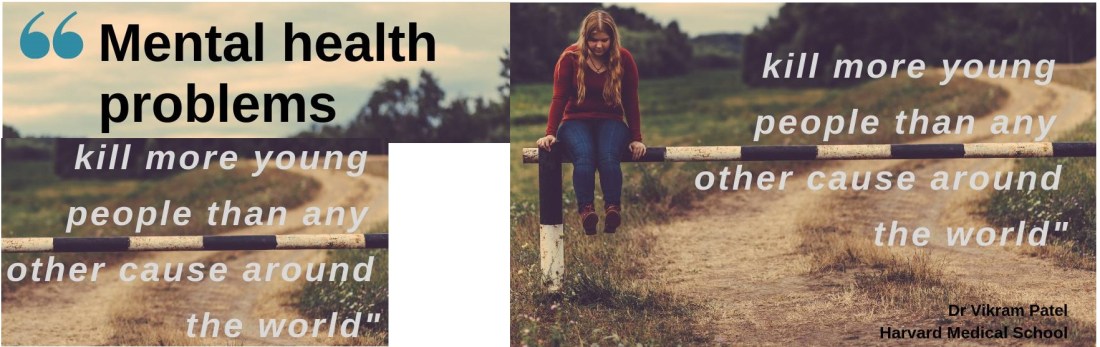
The number of teens who felt useless and joyless – classic symptoms of depression – surged recently and teen suicide attempts increased. It is a huge problem to the teens themselves, and it is also a problem to the society. One doesn’t really have a life if he is not happy; he will be like a zombie who walks around, doing something but not happy doing it and not knowing why he continues doing it. He may harm himself, and he may also harm innocent people without any reason, hence is a time-bomb to the society.


The mental health issues may be due to academic pressure, peer pressure, economic pressure, relationship problems, and some people blame it on the ascendance of the smartphone. Did the addiction to smartphone causes depression, or joyless living cause addiction to smartphone? That is the question, and the answer is probably the latter. Many “successful” individuals were unhappy with their “lives” too. At the moment before they die, they would probably say: “I have come to the pinnacle of success in business. In the eyes of others, my life has been the symbol of success. However, apart from work, I have little joy. Finally, my wealth is simply a fact to which I am accustomed. At this time, lying on the hospital bed and remembering all my life, I realize that all the accolades and riches of which I was once so proud, have become insignificant with my imminent death. In the dark, when I look at green lights, of the equipment for artificial respiration and feel the buzz of their mechanical sounds, I can feel the breath of my approaching death looming over me. Only now do I understand that once you accumulate enough money for the rest of your life, you have to pursue objectives that are not related to wealth. For example, stories of love, art, dreams of my childhood. No, stop pursuing wealth, it can only make a person into a twisted being, just like me.” – These aren’t Steve Jobs’s last words, but they still managed to inspire many people. “Successful” people become addicted to work because of joyless lives, the same way teens become addicted to smartphones. They did look forward to wake up every morning to go to work or play with smartphones, until they don’t. Yet many people say love-your-work is right but love-your-smartphone is wrong. In actual fact, both are not right and both are not wrong. What is right and what is wrong, actually?


I love my children, the same as most parents do. I don’t want them to be harmed in any way. To achieve this, I can try to protect them whenever they are with me. But I won’t be with them all the time and forever. They will have to learn to protect themselves and be resilient, able to become strong and healthy again after something bad happens. Not only they must be physically strong, they must also be mentally strong. There are limits to one’s physical strength, but it is possible for one’s heart to be so strong like it is shielded by “golden bell” (金钟罩) and “iron cloth” (铁布纱). It is possible to have heart and intestine like iron and stone (铁石心肠). Is it wrong to be unforgiving and cruel? It is not politically correct, but it is not necessarily wrong. Politically correct is not correct; it is only correct politically. After all, political language is designed to make lies sound truthful and murder respectable, and to give an appearance of solidity to pure wind.


Right and wrong are in the “box” (方内), but the problem is there are many “boxes” everywhere. If you subscribe to one “box”, you have one set of right and wrong. If you subscribe to a few “boxes”, you find that the different sets of right and wrong are conflicting with one another. You are thinking out-of-the-box (方外) when you start to question whether there are absolute right and absolute wrong. You will have freedom of thoughts (思想解放).


To believe in right and wrong is very stressful. Not believing in right and wrong is bewildering. Right and wrong are like proton and electron; they are opposite but attracted to each other, and both are indispensable (正反相依,对立相存). The universe cannot exist with too much proton (Yang) or too much electron (Yin). It is a matter of maintaining the balance in time and space. There will be imbalances from time to time and from one place to another place, but that’s OK. Wanting to be right and hate to be wrong all the time will be very stressful, whether you are imposing on yourself or other people. Other people imposing a set of right and wrong on you will also make you stressful. More often than not, you may think you are right but other people think you are wrong. That is why we see people committing suicide, quarreling in a family, racial/religious disputes, and wars between nations.


A group of blind men have never come across an elephant before. They wish to learn and conceptualize what the elephant is like by touching it. Each blind man feels a different part of the elephant body, but only one part. The person, whose hand lands on the trunk, say:  “Elephant is like a big snake”. Another one, whose hand reaches its ear, say: “Elephant is like a kind of fan”. The third person, whose hand is upon its leg, say: “The elephant is a pillar like a tree-trunk”. The blind man who places his hand upon the elephant body say: “Elephant is a wall”. Another who holds its tail say: “Elephant is a rope”. The last feels its tusk and say: “The elephant is that which is hard, smooth and like a spear”. They describe the elephant based on their partial experience and their descriptions are in complete disagreement on what an elephant is. They come to suspect that the other person is wrong and they come to blows. The moral of the parable is that humans have a tendency to project their partial experiences as the whole truth, and ignore other people’s partial experiences. We should consider that we may be partially right and may have partial information. It doesn’t mean we have to feel unhappy to have doubt about our understanding; we just have to accept that it’s OK to be partially right but not totally right. “Whenever you find yourself on the side of the majority, it is time to pause and reflect.” – Mark Twain. Just because you have the similar view as the majority doesn’t mean you are right. It is highly possible that it is a groupthink.


HOW TO RAISE A RESILIENT KID: I AM NOT RIGHT BUT THAT’S OK

Table-of-Content

Have you ever felt guilty when you were accused of doing something wrong, or not doing something you are supposed to do? Have you ever felt obligated to do something when you were told you have a duty to do it? Have you ever felt fear of losing something or someone when you were threaten with such plausibility? Do you like feeling stress and anxious when you desire to get something, or to lose something? Do you like the angry feeling when something bad happens, or something good didn’t happen according to what you wish? Do you like the sad feeling of losing a love one, or being betrayed by a friend? Do you like the disappointment feeling of failure? Will you feel devastated if you or your love ones are dying? Are you sure you have the mental strength to get back up and continue to live happily after a devastating experience?

If you have good health in terms of mind and body, you have everything that you need. If you have all the things in this world but not happiness and good health, nothing is useful to you. It is obvious that the paramount purpose of education is for the students’ wellbeing in terms of mind and body; everything else is secondary (such as ethic, moral, cognitive skills, interpersonal skills, social unity, job readiness, etc.). You must first know how to take care of yourself. You can’t pour from an empty cup. When you are strong, mentally and physically, you will then have the capacity to love your neighbors. You become one with abundant to give; rather than a poor guy who needs someone to supply love and compassion to you.

This blog aims to bring out the ancient wisdoms on how to live our lives to the fullest. To do that, we must be ready to unlearn some common dogmas and relearn some uncommon ideas. If you aren’t ready to hear an idea — no matter if it’s legitimate or urgent — then it won’t matter. You will reject it, miscategorize it, or mock a caricature of it. A strong grip on common knowledge (执于法) will not take you very far. You will be as common as everybody else.

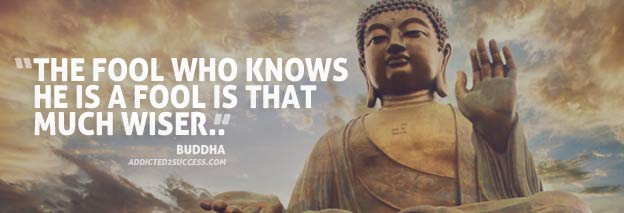
Everybody thinks he is right (执于我). People think you are wrong when you are different or you have a different view from them. The whole problem with the world is that fools and fanatics are always so certain of themselves, and wiser people so full of doubts. Nobody is right, so it is OK that you are not right, so long as you are not wrong. Don’t be afraid to be not right. In fact, you should not desire to be right; you should not think like the fools and fanatics. You should not think you are right in order that you keep your brain half-empty and ready to learn new ideas. The sea can become big because it stays low and accept the discharges from all rivers. Be like the sea, have the stomach to accept new ideas, and have the stomach to forgive and accept the fools and fanatics (海纳百川   有容乃大). The illiterate of the 21st century will not be those who cannot read and write, but those who cannot learn, unlearn, and relearn. Continue to improve your intelligence (睿智), learn to think critically (i.e. not blind acceptance of any teaching), and widen your knowledge on all subjects (聪明). These are essential to gain the ultimate wisdom of lives (道).

The weakest part of your body is your heart. It can be hurt by words into your ears and images into your eyes. To become resilient, you must strengthen your heart more than anything else. To be as strong as the cliff of one thousand foots, you must minimize your desires (壁立千仞   无欲则刚). The ultimate wisdom of lives is about you and you alone. You are the most important one to yourself, the one who deserves your love the most. If you have a high level of desires (欲), you will need a lot of tangible and intangible things to fill that gap between what you need and what you want. You cannot feel happy and live your life to the fullest, and you will not look steady and respectable (like the cliff). But it takes high intelligence to minimize desires and resist temptations because we are not talking about the common types of desires. You need to resist the temptations of achieving “success” for yourself and your love ones, of having a strong grip of your life and the lives of others, of doing your “duty” to change the Nature according to your wishes, of blaming yourself for any “imperfections”. When you gain the ultimate wisdom of lives, your heart will be shielded with “golden bell” (金钟罩) and “iron cloth” (铁布纱). You will be resilient.

Some books teach you how to be resilient. You are told to stay calm and ask yourself some questions. If you fall down one day, and you are very weak, would you be able to stand back up by yourself? If you are overwhelmed by sadness, anger, fear, or physical pain, would you be able to stay calm, or listen to advice? You need to be strong. The only way to be strong is to learn the way to become strong before something bad happens. You will then be able to withstand or recover quickly from difficult conditions. That is the meaning of resilient. Everybody who goes to the fighting ring has a plan to defeat his opponent until he gets a punch in the head; the plan becomes useless. A perfect plan is useless if you don’t have the strength to execute it. You can learn how to be resilient. But if you don’t become strong, you will not be able to spring back into shape after bending, stretching, or being compressed.

Don’t ask what the meaning of life is; life is meaningless if you are not happy. There is no path to happiness; happiness is the path. There are many things that you can be happy about your life; don’t focus on the unhappy things. There are many white spaces on the whiteboard; don’t focus on the black ink. That is why you need to be resilient; so that you can continue to enjoy the happy moments of life even if there are difficult situations from time to time.

Does anyone prefer to live without happiness?

Do you really need to have a lot of things (fame, knowledge, wealth, relationship, colorful lifestyle, delicious foods and leisure) to be able to feel happy?

Can you still consider yourself successful if you need a lot of external helps (fame, knowledge, wealth, relationship, colorful lifestyle, delicious foods and leisure) to live happily?

Can you consider yourself successful if you always live in fear, anger, sadness, guilty, or feeling duty-bound to someone/something?

The unhappiness of anyone is the doing of him/her to himself/herself, because only he/she has access to his/her heart. It is not the obligation of anyone else to make him/her happy. Similarly, nobody is guilty if you don’t want to make yourself feel happy.