BEST FRIEND

Table-of-Content

A pet dog is the best friend you can have. You can enjoy the happiness of pouring your love and compassion to her, and she will gladly accept them, and never asks for more or expect anything else from you. She doesn’t think you owe her anything. She will never be angry at you if you hurt her unintentionally (or even intentionally), suspicious of your good intentions, or betray you because of self-benefits. She is so easy to love. She will never abandon you; she will even sacrifice herself for you. She probably loves you more than you love her. Her heart is pure. You look like Buddha to her, because her heart only thinks of Buddha. She is emotionally attached to you. She would mourn the loss of her best friend or “master”. You would hope that she has a good rebirth when she dies. If you are enlightened, you would know that mourning doesn’t serve any good to her and to yourself.

You must practice being thrifty (俭) in term of emotion. By being thrifty to yourself and each friend, you will have more loving energy to spare, and you can love more dogs. If you prefer to pour all your love to one pet dog, obviously you will have no more energy to accept another dog. If you have hundreds of dogs and you try to give more love to each and every one of them, you will be out of loving energy. By being thrifty, you don’t care too much about each dog, therefore less emotional attachment. It will be easier to stop mourning the loss of a dog. Don’t try to give more than what you can give. It doesn’t mean you don’t love your friends. Love doesn’t have to be chained together with emotional attachment.

Lao Zi said: “The Great Nature has no preferential love. It cares for all things in the universe equally and no selected group receives special care. It treats all things like straw dogs used as offering in sacred ceremony. Great leader shall have no one he especially dears or anyone he disfavors. He cares for all people equally but at the same time leaves them alone to live and die on their own course.” (天地不仁 以万物为刍狗。圣人不仁 以百姓为刍狗。)

Children are the second-best friends you can have. You can enjoy the happiness of pouring your love and compassion to them, although there are many hardships from time to time. Hardships don’t have to cause unhappiness; just like pains from falling down don’t have to cause unhappiness or suffering. The feeling of hardships is just hardships; the feeling of pains is just pains. If you feel unhappy, it is either due to the lack of your capacity to love, or your desire to do more than you have to (i.e. you feel fear, obligation and guilt about the self-imposed responsibility which may be on the high side). You should never think that you owe them anything, and you should make them understand that you owe them nothing. They will be grateful, and the feeling of gratefulness is good for their mental health; they will feel happier when they have the capacity and mental toughness to be grateful (but not feeling that they owe someone something). Be grateful for the friendship, and you will feel happier. Buddha teaches us to abandon desires. You must not desire for any reciprocation; a gift is a gift, not an investment and no return-on-investment. You must not desire to carve their path of success, setting milestones, or making sure they meet your standards. You can be a coach, guiding them along the way as well as introducing new things to pique their interest to learn or to try, without coercion. You don’t have to take pride or blame for whatever the outcomes may be. Don’t desire to be proud. The success of champions is not due to their coaches alone (是以圣人为而不恃,功成而不居也。若此,其不欲见贤也). After all, very few percentages of people in the world can be “successful”, and your children need not be among the champions. You are successful if you are happy with yourself, regardless of what others think. Don’t live in the greatest prison which is the fear of what others think of you. If you love your children, teach them to abandon emotional attachment; teach them to love themselves (i.e. be selfish). Don’t make them mourn the loss of anyone.

Your children are not your responsibility, although many people think otherwise. They are not your burden but a source of your happiness, like a pet dog. They got their bodies from the Mother Nature. It is true that, out of love, you hope the best for them. If you coerce them to become champions or something else, you are poisoning your heart with desire. They will be unhappy and you will be unhappy. Stop doing anything which makes you unhappy. If you don’t know how to be happy now, don’t be so arrogant to assume you know the future or you will be happy in the future. Tomorrow may be the end of the world if World War III breaks out; and being unhappy now is a waste of your last day on Earth. Be happy while you can, and you will have as many happy days as you can if the world ends a few years later, provided your mind and body are still healthy by then. A little bit of poison may not kill you, but you must remember not to play God. The Mother Nature will decide the children’s destiny and what form they become in the future, in terms of mind and body. Don’t feel guilty for what the Mother Nature do to them. Don’t be fearful; it may not be so bad.

I don’t know the future and I don’t know what will happen after I die. I don’t have to know and I am not afraid. It doesn’t matter. What matters is how to live in the present moment wisely and earnestly. I live with a happy mind and I intent to live happily tomorrow; so, I don’t poison my mind and body today. It is best to be able to stay happy without the need to rely on poison/medication.

Parents are your third-best friends. You can enjoy the happiness of pouring your love and compassion to them, but they don’t always want to accept your love. You must not “coerce” them to accept it; respect their wishes instead. There may be hardships from time to time, especially when your parents are sick. Similarly, hardships don’t have to cause unhappiness. If you feel unhappy, it is either due to the lack of your capacity to love, or your desire to do more than you have to (i.e. you feel fear, obligation and guilt about the self-imposed responsibility which may be on the high side). You should never think that you owe them anything; unfortunately, you can’t make them understand that you owe them nothing. Be grateful for the friendship because gratefulness should make you happier and not more grievance. Don’t expect gratitude; they are too old or too late to learn, unless they want to learn. Buddha teaches us to abandon desires. You must not desire for any reciprocation; a gift is a gift, not an investment and no return-on-investment. You don’t have to take pride or blame for whatever the outcomes may be. The cycle of life, death, rebirth and suffering will be experienced by everybody; you don’t have to associate it with unhappiness. Unhappiness doesn’t serve any good to them and to yourself. Love yourself (i.e. be selfish). Don’t mourn the loss of anyone.

Your spouse and close-friends can be your best or second-best friends, depending on your luck and how you choose your friends. It also depends on your deeds. If you enjoy the happiness of pouring your love and compassion to them, there are good chances that they will love you. They don’t always want to accept your love. You must not “coerce” them to accept it; respect their wishes instead. You owe them nothing, and they owe you nothing. Expect nothing, and you will never be disappointed. Be grateful for the friendship; gratefulness should make you happier. Buddha teaches us to abandon desires and emotional attachment. You don’t have to take pride or blame for whatever the outcomes may be. Love yourself (i.e. be selfish). Don’t mourn the loss of anyone.

All other friends can be your fourth-best friends. You can enjoy the happiness of pouring your love and compassion to them, but they don’t always want to accept your love. You must not “coerce” them to accept it; respect their wishes instead. They can be angry at you if you hurt their feeling unintentionally; you may not have done anything wrong, but you just don’t always know what they are thinking or how they interpret your action or inaction.  They are always suspicious of your good intentions; and rightly so because there are as many bad people as good people around. If you really love them, you would want them to be selfish and love themselves; you don’t want them to trust someone easily and get hurt. You should also not trust someone easily and get hurt when you are betrayed. Trust a person only if you are mentally ready to be betrayed, i.e. you will not be unhappy if you get hurt; the feeling of pains is just pains, and you don’t have to associate it with unhappiness or suffering. Be grateful for the friendship; gratefulness should make you happier.

I intentionally repeated Buddha’s and Lao Zi’s advice about abandonment of desire, and abandonment of emotional attachment, because some people think it is hard to do. They need constant reminders, encouragement, and reassurance. When you desire for friendship too much, you think of it as rare precious thing, you will not be able to let go simply because you don’t want to let go. It is not about being heartless; it is about thinking rationally and being natural like the Nature. Humans think mourning the loss of someone is natural because we think too much, therefore become ignorant and unnatural. Animals are more natural than humans; we should learn something from animals.
HOW TO CHOOSE A FRIEND

Table-of-Content

Buddha said: “Just as a stick from a funeral pyre, burning at both ends and smeared with dung in the middle, can serve no useful purpose as fuel in the village or as timber in the forest – using such a simile do I speak of the person who is concerned neither with his own good nor the good of others. The person who is concerned with the good of others but not his own is more excellent and higher than this. The person who is concerned with his own good but not the good of others is more excellent and higher still. And he who is concerned with both his own good and the good of others – he is of the four persons the chief, the best, the topmost, the highest, the supreme.” A person who is not concerned with his own good is either the worst or second worst of the four types of persons. He cannot be trusted even if he is only concerned with the good of others; because he is either pretending to be selfless or he is insane (due to years of brainwashing by religious doctrines). A person who pretends to be selfless is more dangerous than a person who is concerned only with his own good; because there is evil selfishness hiding behind the fake selflessness. A person who is concerned only with his own good doesn’t deserve to have a good friend; he only deserves to have a friend similar to himself who is not concerned with the good of others. In the end, he may have to live alone in isolation.

There were many well-known scholars in Chinese history who seem to be concerned only with the good of others (伯夷, 叔齐, 霍光, 王莽). However, their real intention was to fish for honorable names or fame (沽名钓誉). Some managed to earn the honorable names after they die; some managed to earn the fame as well as political power to rule the country and also to gain personal pleasures. Bo Yi (伯夷) and Shu Qi (叔齐) were the advisers of the King of Zhou State. They tried to stop the King from overthrowing the throne of the evil Emperor and dismantling the Shang Dynasty. They opined that a subordinate must never be disloyal to the superior. The King of Zhou didn’t listen to their opinion. After the victory, Bo Yi and Shu Qi refused to eat anything from the land of the newly formed Zhou Dynasty. They chose to starve to death and become famous for being “loyal”. Huo Guang (霍光) was well-known to be morally upright to the extreme and never made a mistake in following public and private rules. He was entrusted by Emperor Wu of Han Dynasty to protect and assist the 8-year-old heir. The new Emperor died at 21 years old. A grandson of Emperor Wu took the throne. Soon, Huo Guang deposed him, in the name of “the good of the state”. He then installed his choice of Emperor, married his daughter to the Emperor and made her the Empress. He autocratically controlled the government and appointed many relatives as government officers. Wang Mang (王莽) was well-known to be humble, respectful, prudent, forgiving and compassionate when he was the Prime Minister of Han Dynasty. He made his daughter the Empress, poisoned his son-in-law Emperor, and installed his 2-year-old grandson as the new Emperor. Finally, he forced his grandson to pass the throne to him and founded the Xin Dynasty.

Guan Zhong (管仲) was the Prime Minister of the State of Qi. When he was terminally ill, the King of Qi asked him: “Is there any last word that you want to counsel me?” Guan Zhong said: “I hope you don’t trust Yi Ya, Shu Diao and Kai Fang.” The King said: “Yi Ya cooked his own child to satisfy my desire to taste a child’s meat. Shu Diao castrated himself to become a eunuch in order to stay close to me. Kai Fang is so loyal to me that he didn’t go home to see his parents for fifteen years. Why should I be suspicious of them?” Guan Zhong said: “Those are the reasons which make them suspicious. Killing his own child, castrating himself, and forgetting his parents are some of the cruelest things. With such cruelties, how can they be loyal to the King? They cannot be trusted.” The King nodded but didn’t listen to the advice after Guan Zhong died. When the King was critically ill a few years later, the three “loyal servants” each supported a prince to take over the throne. The country was thrown into chaos in the civil war. The King was locked in a palace alone and prohibited from making any kind of contact with anybody. He was finally starved to death. His corpse was left to rot in the palace for sixty over days. The foul smell was so strong; flies filled the whole palace; and maggots crawled out to the street.

Gong Sun Hong (公孙弘) was the Prime Minister of Emperor Wu in Han Dynasty. He was frugal with his private life. His colleague, Ji An (汲黯), complained to the Emperor that the frugal lifestyle of Gong Sun Hong was simply to fish for honorable names. The Emperor asked Gong Sun Hong: “Is there any truth in Ji An’s complaint?” Gong Sun Hong said: “His complaint is true. Ji An is my friend and he knows me well enough. His action of publicly criticizing me really pointed out my flaw. My income is among the highest, but my frugal lifestyle is similar to common low-income people. My action is no doubt trying to fish for honorable names. If Ji An is not a loyal servant, the Emperor may not hear the honest criticism and truth about me.” After the incident, the Emperor viewed Gong Sun Hong as a truly honest person and trusted him even more. A truly honest person need not argue with anybody about his lifestyle. He might not be thinking to fish for honorable names, but his action did have the same effect. Arguing whether he did or didn’t think about the effect would only make him seemed dishonest. Conversely, by not arguing, he showed that he was honest because he was not trying to hide anything. He was happy with his lifestyle, regardless of the outcome and how other people perceived his intention. He was satisfied to know that he was being honest to himself. There was no need to sweet-talk other people into believing him as an honest person. An honest person convinces other people with his deeds, not with his words. Confucius said: “Don’t worry about being misunderstood by other people; instead, worry about misunderstanding other people.” (不患人之不己知,患不知人也。)

WHAT FRIENDS ARE FOR

Table-of-Content

During the hunter-gatherer period in the history, friends were absolutely necessary because humans were weak compared to many animals. The only way for them to defend themselves was to gang up together to pursue wild animals and to collect wild plants for foods. Being trustworthy and trusting their friends to be trustworthy were absolutely necessary for survival. Personal interest was tied together with community interest. Lack of trust could bring disaster to the community and therefore the individuals. Hence, trust was abundant and no one would even think of betraying a friend, and there was no need to cry for trust. Trust was natural and not an afterthought. Their hearts were pure. We can see the same in a pack of wolves. We are still weak today. During wartime, personal interest is tied to national interest, and the people will sometime become united voluntarily. During peaceful time, unity is not essential anymore. We must face the reality that people will not stay united no matter how hard a leader harangues the people for the sake of unity. Having a national enemy is not necessarily a bad thing if national unity is what we desire. Some politicians use racial hatred as a way to unite a race against all other races because they see unity as a precious thing. In this instance, uniting around a political leader is a symptom of moral bankruptcy. On the other hand, the lack of trust is a symptom of diversity. It is not necessarily a bad thing; it is not bad to live in peaceful time although the people are not united. We are still weak today, but we don’t face the same threat as the hunter-gatherer society. We need more friends if we are weaker, and we need fewer friends if we are stronger and self-sufficient in terms of mind and body.

Buddha didn’t need to have friends, but he wasn’t afraid to have friends. He was happy to have companions. Expressing love and compassion will make you happy. The “utility” of friends is to receive your love and compassion; you feel happy when your friends are happy. This is another example of achieving the greatest selfish interest (i.e. feeling happy) by being selfless (i.e. not thinking about yourself). You should not choose a friend based on how much material benefits he can give you, unless you are a beggar. Happiness from evil deed is temporary; soon, one will return to feel fear and anger. Happiness from giving love and compassion is eternal. Not thinking about yourself doesn’t mean you will not receive love and compassion reciprocated from your friends.

Not everyone wants to receive your love and compassion. That’s OK. Some people don’t want to be your friends because you are not the kind of friend they want; they have a different taste. You also make your choices when it comes to making friends. Don’t feel sad when you are rejected. You can pour your love and compassion to other friends. Nothing and no one is so precious that you cannot let go. If you can lift up something, there is no reason you can’t let go, unless you don’t want to let go because you think it is precious. Not everyone loves Buddha. Buddha cannot love people who are not destined to receive his love and compassion (佛不度无缘众生).

The main reason Buddha left home was to find enlightenment so that he could escape the cycle of life, death, rebirth and suffering. It was a selfish endeavor, for his self-interest. Of course, he later shared his thought to help others. But until the end of his life, he never forgot what he set out to do; he stayed focus on his original objective. He did what he preached: abandonment of desires, hence abandonment of emotional attachment. Love and attachment are two different things; most people mistaken that more attachment must come with more love. Instead, more attachment may sometime mean more “ownership” rather than love. You can have friends, but you don’t have to cling on to any emotional attachment, hence no mourning of the loss or death of a friend. No worry about the future.

FRIENDS AND FOES 离和合

Table-of-Content

There are many good people around; there are equally many bad people around. Good and bad are just temporary definitions to describe vaguely the different types of people; of course, they are inaccurate definitions. Good people may become evil from time to time; bad people may also show compassion from time to time. Animal spirit is inside each of us; it depends on how well we control it for the good of ourselves and the good of everybody around us. Animals are capable of being violent, and also being compassionate at other time. We must not let our guard down.

If you read more stories and histories about good people, and less about bad people, you may develop a stereotype that most people are good people. If you always hang around with good people, you may become complacent or ignorant of the hidden danger. If you read more stories and histories about bad people, and less about good people, you may develop a stereotype that most people are bad people. If you were victimized by bad people, the bad experience may be traumatic and you may become afraid to socialize with anybody. You need to find a balance. The true nature of reality is very complex; you must not try to generalize or divide it simply into good and bad, or right and wrong.

The simplest hideout to find peace of mind is in the wild; stay single and live alone. Some intelligent individuals hide in the city by being little different from all other common people and still find peace of mind; having family and friends may bring more happiness. In the government, extremely intelligent personnel could be hiding among the villains and not being targeted; he is able to stay equanimity and not swayed into undesirable emotional state. (小隐隐于野, 中隐隐于市, 大隐隐于朝。) In a workplace where people stab each other’s back, to gain honors and humiliate others, intelligent personnel try to stay foolish so that he is not seen as a threat to anybody.

Confucius said: “I admire the intelligent of Ning Wu Zi. When honesty is prevalent in the government, he will contribute his knowledge. When corruption is prevalent in the high place, he will pretend to be foolish. There are probably many individuals who have more knowledge than him, but none could pretend to be foolish as skillfully as him.” (宁武子,邦有道则知,邦无道则愚。其知可及也,其愚不可及也。) Stay humble and pretending to be foolish is much more beneficial to yourself than to be known as the clever guy.

Lao Zi said: “The practitioners of Dao in the past were careful in their actions as if they were crossing frozen river during winter; they were cautious as if they were fearful of any ill intention of the surrounding neighbors; they were courteous as if they were a guest; they were warm-hearted like ice melting during the spring; they had pure feelings toward all (no faked expression of cheer or grief), like natural material that are untouched; what’s in their mind was not predictable, like murky water; they were accommodative, like the valley.” (与呵,其若冬涉水;犹呵,其若畏四邻;俨呵,其若客;涣呵,其若冰泽;沌呵,其若朴;湷呵,其若浊;旷呵,其若谷。) Be vigilant and be kind.

The action by someone may affect your feeling. You may feel unhappy in a bad moment, and feel happy in a good moment, because of external factors. “Murky water left to settle down will slowly become clear. Quiet state being stirred will slowly become active.” (浊而静之徐清,安以动之徐生。) Life is repeated cycles from passive state to active and then back to passive again. It’s OK to feel unhappy or happy, so long as you don’t let your emotion rules your life, and you can quiet down to regain your equanimity. Highs and lows in life are natural. Expecting only highs is being judgmental.

Do you need to have many friends? If you want peace of mind, you need to choose who to surround yourself with and establish boundaries. You need to know how to say no to others, to prevent you from getting overwhelmed, burned out, and stressed due to too many commitments. “One best book is equal to hundred good friends; one good friend is equal to a library.” It may not be easy to find one good friend; but you can always make friends with books. “He who hath many friends hath none.” – Aristotle. A friend to all is a friend to none. Don’t accept anybody as your friend; and don’t try to be a friend to everybody. The world doesn’t deserve you.

Confucius said: “If you don’t respect yourself as a gentleman with high morality, you will not have the charisma to be highly regarded by others. Whatever relationship skills that you’ve learnt will not be firm in you and you will be easily swayed by others. The most important characteristic of a gentleman is honesty and trustworthy. Don’t make friend with someone who doesn’t want to be a gentleman like you. Don’t be afraid to admit your mistakes and change your behaviors accordingly.” (君子不重则不威。学则不固。主忠信。无友不如己者。过则勿惮改。) Stop talking too much about what a good friend should be; instead, you should start being one. If you are not a good person to befriend with, you don’t deserve to have a good friend.

TAKE REFUGE IN YOURSELF

Table-of-Content

The ultimate truth does not belong to anyone or any religion. But the ultimate truth can have huge effects on the daily life of everybody. How can we learn the ultimate truth and achieve enlightenment?

Someone can point to you the location of the mountain top. But the pointing finger is not the mountain top itself. If you wish to reach the place, you will have to climb the mountain yourself. The destination is not where the fun is; the fun is in the journey. Books can only point to you the direction to find the ultimate truth. The books are not the ultimate truth itself. The ultimate truth cannot be expressed in words; intelligence cannot be transferred from one’s mind into another. If you wish to know the ultimate truth, you will have to learn it yourself. Knowing the ultimate truth is not where the fun is; the fun is in the journey of the quest.

Zhuang Zi saw a school of fish in the river. He said: “The fishes are swimming so freely and happily.” Hui Shi asked: “You are not the fishes. How do you know the fishes are happy?” Zhuang Zi said: “You are not me. How do you know whether I know the fishes are happy?” Hui Shi said: “I am not you, so I don’t know whether you know the fishes are happy. But you are not the fishes, so you cannot possibly know whether the fishes are happy.” Zhuang Zi said: “Let’s go back to your first question. You asked how I know the fishes are happy. That means you already know I know the fishes are happy.” Whether or not the fishes are happy is not important. Zhuang Zi was happy for the freedom of the fishes and that was all that matter to him. We don’t need to know who really know the ultimate truth. All that matter to us is we find happiness in the journey of the quest.

The secret of health for both mind and body is not to mourn for the past, worry about the future, or anticipate troubles, but to live in the present moment wisely and earnestly. The past is in the past; mourning for the past will not change the past but kill a lot of brain cells and bring no benefit at all. The future is in the future; worrying about the future will not change the future but kill a lot of brain cells. What you can change is the present moment; you can become a better self, plan for the future, and focus on what is possible to do now.

A king was reading a book. An old man was making a wheel outside the house. The old man asked the king: “What book are you reading?” The king said: “I am reading a book written by the Sage.” The old man asked: “Is the Sage still alive?” The king said: “He died long ago.” The old man sighed and said: “That means the book you are reading is just the waste matter of the forefather.” The king was angry and said: “What nonsense are you talking about? I give you a chance to explain. If you simply cook up the rubbish, I will cut off your head.” The old man said: “Please listen to me and don’t be angry. My work is making wheels. Please allow me to explain based on my experience in making wheel. When making a wheel, if we swing the knife too fast, we can save some energy but the wheel will not be round. If we swing the knife too slow, we will need more energy and time but the wheel will be round. The best way is to swing the knife not too fast or too slow. Use the heart to control the hand. But I have not been able to pass down the skills to my son. That is why I am still making wheel although I am already 70 years old. Using the same reasoning, the ultimate truth which the forefather acquired through enlightenment cannot be passed down. Isn’t that very obvious? Isn’t it true that the book you are reading is just the waste matter of the forefather?” Expecting to acquire the ultimate truth from the book is impossible. You can only get a hint from the book and do the thinking yourself in order to achieve enlightenment. How fast is too fast, how slow is too slow, how much is good, how little is bad, require not only knowledge but personal experience and intelligence to really make the right calls in various situations.

In the early stage of learning martial art, we follow exactly all the teachings from the master (守). To master the martial art, we need to be innovative and break some rules taught by the master (破). To achieve mastery of martial art, we need to leave the original form altogether such that we are totally flexible and not constrained by any form (离). We move based on the movement of the opponent, like water adapting to the changes. Bruce Lee learnt Weng Chun initially. He then founded Jeet Kune Do. He said: “Styles tend to not only separate men – because they have their own doctrines and then the doctrine became the gospel truth that you cannot change. But if you do not have a style, if you just say: Well, here I am as a human being, how can I express myself totally and completely? Now, that way you won’t create a style, because style is a crystallization. That way, it’s a process of continuing growth.” “Be like water making its way through cracks. Do not be assertive, but adjust to the object, and you shall find a way round or through it. If nothing within you stays rigid, outward things will disclose themselves.”

If we don’t have a teacher, we may never know there is such a thing called martial art. The first martial art ever invented from nothing would not be very sophisticated. Similarly, we would not do very well if we try to start from scratch and make no reference to any book. By standing on the shoulder of a giant, we are able to see further. We can make higher achievement. If we try to learn from nothing, we may learn nothing. If we start with ignorant and learn from no one, we will probably end with ignorant. That’s OK, if that is what we wish. Really, people from some parts of the world stay ignorant and never go to school their whole lives, and they stay happy until their very last day. Ignorant is not necessarily a bad thing. But the ingenuous people may not be able to survive in a “civilized” world where the people are mostly ingenious. If we start with a small empty space in our minds (i.e. mental space to absorb new knowledge), we will probably end with a small empty space when we die. But if we learn from a teacher some good things and some bad things, stretch out the rubber container of knowledge and make it bigger, and then unlearn all the rubbish, we will have a lot of empty space after the spring-cleaning. The initial empty space and the eventual empty space are both empty spaces, but they are just not the same, at least in term of the size.

Lao Zi said: “Learning new knowledge every day will give you more and more knowledge. However, you may start to have your own doctrines and then the doctrine become the gospel truth that you cannot change. To learn the ultimate truth or Dao, you need to unlearn the doctrines every day until you have no more desire to be rigid in your style of thinking; no more desire to create distinctions between right and wrong. Rigid distinctions between right and wrong are inaccurate. In the final stage, learning the ultimate truth or Dao requires a higher level of thinking: no more distinction of desire and no desire. Your thinking will be fluid like water, adapting to changes naturally. You will be able to express yourself honestly and completely and yet do no wrong.” (为学日益,为道日损。损之又损,以至于无为。无为而无不为。) Do whatever that makes you happy and never feel obligated to follow rules. Follow rules only when it leads to happiness, or it helps to avoid unhappy consequences. Focus on the objective of the rule rather than the rule itself. Rules are guidance or paths, not intelligence itself. Rules are only applicable in certain time and space. You won’t learn the ultimate truth by following written rules or paths.

Confucius said: “If a person has no compassion, his good manners are meaningless.” (人而不仁,如礼何?) A person who insists on following the rules even though the rules will cause disharmony is an uncompassionate person; following the rules defeat the purpose of the rules. This is the typical characteristic of bureaucracy. The “rulers” have forgotten that the use of rules is to create harmony (礼之用 和为贵). Confucius also said: “The forefathers didn’t know much about good manners and they were blunt because they were innocent (i.e. they had pure hearts). The later generations followed a better set of good manners and they displayed gentlemen behaviors. However, in term of the effectiveness or real benefit of good manners, I prefer the forefathers’ way.” (先进于礼乐,野人也;后进于礼乐,君子也。如用之,则吾从先进。) You must focus on what you want to achieve with the rules in the first place instead of strictly enforcing the rules. John Locke, commonly known as the “Father of Liberalism”, said: “The end of law is not to abolish or restrain, but to preserve and enlarge freedom.” We do need to have law, but the law enforcement shall not abolish or restrain freedom. Focusing on the rules of the rule-of-law will create an orderly society but with no spirit; focusing on the spirit/objective of the laws will create a society which is alive and full of spirit but naturally has some disorderly behaviors here and there.

Don’t grip strongly on Me (like saying “I am always right. I don’t need any book or teacher.”) (破我执), don’t grip strongly on knowledge and methods (like saying “the teacher said this is right and that is wrong, so we must follow”) (破法执), and don’t grip strongly on nothingness (like saying “I am wrong, you are wrong, everybody is wrong, nothing is right, and we follow no rules”) (破空执). You will miss it or lose it if you try to grip it strongly. The truth is not inside Me, not in the book, and we must not rely on nothing. We need a combination of Me (i.e. self-confidence), the book, and nothing (i.e. be innovative). What does the truth look like? The spirit of Yi Jing gives a good hint: the truth is simple in its form (简易), it changes constantly (变易), but there is a pattern which doesn’t change within the changes (不易). Learn not only the knowledge of Buddha, but the intelligence of Buddha. The intelligence is not in the book (万法皆空); the book only shows us the path. Memorizing the knowledge and reading the whole library of books insatiably will not make you intelligent (执则迷,迷则不悟). Conversely, when you attain the intelligent through enlightenment, you will not need any book anymore. There was no book. It was the intelligent which gave birth to the first book; not the other way around.

Climbing up a high mountain of a thousand foots has to start by stepping out the first step (百仞之高 始于足下). If you prophesied that you will not be able to make it, your prophecy will be fulfilled by yourself. If you doubt your capability to make it, you will give up halfway. If you decide to do it no matter you make it to the top or not, your first step may lead to your success. Whatever happens, the views along the way are worth the trip. What more can you ask for?

PEACE IS NOT THE ABSENCE OF WAR

Table-of-Content

Many people want to collect medals. They believe the purpose of living is to become successful leaders (in politics, military, businesses, religions, societies, educations, etc.). They would do absolutely everything to collect their medals. As the leaders, they want peace and order, and that often means obedient followers. As a result, we live under constraint, compulsion, oppression, and undue influence; all in the name of peace and order, sometime also in the name of law and justice. Is the absence of war equivalent to peace?

The simplest hideout to find peace of mind is in the wild. Some intelligent individuals hide in the city by being little different from all other common people and still find peace of mind. In the king’s court, extremely intelligent personnel could be hiding among the villains and not being targeted; he is able to stay equanimity and not swayed into undesirable emotional state. (小隐隐于野, 中隐隐于市, 大隐隐于朝。)

Not making enemy with anybody and hiding (in the wild, city, or among the villains) may not be sufficient to maintain peace of mind. Fearful of war will make you cowardice. Being not fearful of war doesn’t necessarily mean you like to go to war. In fact, not fearful of war is another important way to avoid conflicts. Villains like to victimize weak people. Learning martial art and not afraid to fight can avoid being challenged. You must be ready to fight before you can negotiate for a peace treaty (能战后能言和), otherwise any peace deal will just be temporary and the villains will come back for more rewards. If a war is inevitable, defend your family. No superhero would hesitate to kill villains.

From Sun Zi Art of War, if you have the weakness of being greedy, the enemy can use what you like to lure you (利而诱之). If you have bad temper, the enemy can use what you dislike as a mean to enrage you and lead you to make missteps (怒而挠之). If you are a humble and careful person, the enemy can pretend to lose or retreat and make you feel proud so that you lower your guard (卑而骄之). If you stay hermit in your fort, the enemy can find ways to make you sleepless and become tired (佚而劳之). If your team is united but there is lacking in trust (because of selfishness), the enemy can sow discord and create disharmony in your team (亲而离之). Complacency can lead to defeat. A leader must be selfless, no desire for personal profit or fear of personal loss, stay calm, be cautious, ready to fight and not simply relying on the fort for defense. Unity built on current benefits or threats is unreliable. Trust based on spiritual intelligence and mutual loves will be long lasting. Sun Zi said: “Five deadly weaknesses that a leader must avoid are: blind bravery and not afraid to sacrifice himself and his army, therefore he can be easily tricked to a battle and killed; afraid to die, therefore he can be easily tricked to flee and captured; bad temper, therefore he can be easily enraged to make mistakes; desire for clean name and reputation, therefore he can be easily humiliated to feel ashamed and lose his calm; love the people too much, therefore he can be easily frustrated and led into a trap.” (故军将有五危: 必死, 可杀也; 必生, 可虏也; 忿速, 可侮也; 廉洁, 可辱也; 爱民, 可烦也。)

Both spiritual intelligence and cognitive intelligence are important for your happiness, whether or not you become a leader. Blind bravery, blind love for your life and the life of everybody, bad temper, and desire for clean name (as opposed to being clean but not worry about what people think), can cause more harm than good albeit with good intention. You will have less weakness if you have less desire. An intelligent person will not be fooled (不惑) by desire. If you can be fooled by desire (迷惑), you are not really intelligent.

Lao Zi said: “There are three important principles that I uphold with determination: the first is unconditional love for others; the second is thrifty, emotionally and financially; the third is dare not compete to become a world leader. One who has unconditional love will be able to be courageous. One who is thrifty will be able to reach out more widely. One who dares not compete to become a world leader will be able to lead the accomplishment of various tasks. If we abandon unconditional love but only behave courageously; abandon thrifty but still try to reach out widely; abandon compromise and stay behind but be the first to start a fight; we will face great danger. A leader with unconditional love for his people will be able to win when he goes to a war; have a sturdy defense against aggressors when he set up a defensive wall. When the Nature wants to fortify something, it will use unconditional love to sustain it.” (我恒有三宝,持而保之:一曰慈,二曰俭,三曰不敢为天下先。慈故能勇,俭故能广, 不敢为天下先,故能成事长。今舍其慈,且勇;舍其俭,且广;舍其后,且先;则必死矣。夫慈,以战则胜,以守则固。天将健之,如以慈垣之。)

Confucius said: “A benevolent person will definitely have good advices for others, but a person who gives many advices to others is not necessarily a benevolent person. A compassionate person will definitely have courage to defend his love ones, but a courageous person is not necessarily a compassionate person.” (有德者必有言,有言者不必有德。 仁者必有勇,勇者不必有仁。)

If you have a small cup in your heart, it can be easily filled up. You don’t need too much to become satisfied. Contentment is the greatest satisfaction. You can then reserve and conserve all your loving energy for everybody around you and never think about reciprocation. That is the true unconditional love. You can give away everything you have because you know your brain and your health are your best assets and you will be able to live on without any other asset. If you have unconditional love, you will naturally have courage. You will be thrifty when you have contentment, because your low-level of desire is easily fulfilled. You must also be thrifty to everybody so that you conserve your loving energy to reach out widely. You would want everybody to have contentment so that he can be happy easily. You would want everybody to be self-reliant. War is always bad for everybody. You should never start a war, but preparation for self-defense is essential. Selfless defense against aggression will always win (哀兵必胜) even if your military force is weaker, although it may sometime take a longer year, like what happened in World Wars I and II.

THE GREATEST SHAME IS SHAMELESS

Table-of-Content

The greatest shame is shameless. Shameless thugs and politicians kill and steal but feel no shame. However, because they have a lot of desires, they will engage in competitions and battles constantly. They will lose more battles than they win. Because they kill and steal, they will be in fear constantly, fearing that they will be killed and the wealth they amassed will be stolen. They will be tortured by fear, obligation, and guilt (F.O.G.). They will feel obligated to feed their supporters or followers, who are no less devilish. They will feel guilty if they cannot keep up with the growing stomachs of their supporters or followers. They will not be happy because their hearts are full of hatreds rather than loves.

Being shameless is not necessarily a bad thing because there is nothing that you need to be ashamed of; human’s distinctions of honorable or shameful are false. If you have no desire (无欲), you will not engage in any competition or battle (不争). Then, you will never lose or win. You will not kill or steal, not because you are ashamed or afraid of the punishments of the laws, but you are intelligent (睿智) to know that it is not to your best interest to kill or steal. Wealth is like a dead mouse; only the crows like it, and they fear to lose it. Conversely, if you never think of accumulating wealth (it doesn’t mean you will not get it), you will not be afraid to lose it. You will have no fear, obligation, and guilt (F.O.G.) (无患). You will be happy because your heart is full of loves.

Darth Sidious is as powerful as Jedi Master Yoda. Master Yoda is truly fearless, whereas Darth Sidious derives his power from fear and anger. F.O.G. are really unnecessary although they can be very powerful and provide instant gratifications. In addition, the use of “dark forces” means one will have to pay a huge price.

If you make money honestly in order to live, the money is a store of value for your labor. Money is just a mean or medium of exchange for goods and services, an alternative to barter trade. That money is not like a dead mouse. If you live in order to make money, you are making yourself more of a money-making machine than being a human. The accumulated wealth is like a dead mouse. Both phoenix and crow are birds, but they are just not the same.

Confucius said: “With simple food and plain water; folding up my arms beneath my head as pillow (and no special bed or house); it is enough for me to feel happy in it. Wealth and fame which don’t come naturally, but by immoral means, are like floating clouds; they are not worth having.” (饭疏食饮水,曲肱而枕之,乐亦在其中矣。不义而富且贵,于我如浮云。) “A person who likes to learn the truth but feels ashamed of wearing cheap cloths and eating simple foods, he doesn’t deserve my attention for a discussion; he is not ready to learn the Dao.” (士致于道而耻恶衣恶食者,未足与议也。) “Being poor but not toady, being rich but not proud, are not better than being poor but happy, being rich but polite and compassionate.” (子贡曰:贫而无谄,富而无骄,何如?子曰:可也,未若贫而乐,富而好礼者也。)

Do you feel ashamed of being naked? The people of the state of Yue are naked all day long and not feeling ashamed. You are ashamed because you are “educated” that way. The fact is, there is nothing wrong for being naked. If you are not ashamed, villains cannot threaten you with stolen nude photo; you are invincible instead of being vulnerable. However, you don’t have to be naked in a “civilized” world where the people are intolerant of nudity, and the “civilized” people may harm you in the most uncivilized way although you didn’t do anything wrong. Don’t fear anything, including fear itself; don’t be fear to fear. Fear is one of the important parts of defense mechanism; but don’t cling on to fear. The best defense is no need for defense; don’t be a target of attack. You should not amplify your difference so much so to attract attentions. If you have nothing to fear except fear itself, you are not only fearless but also reckless.

Lao Zi said: “A wise leader who really knows Dao will not dictate the conduct of others. A person who assumes he knows everything and tries to prescribe a standard way of life for everyone is not wise and doesn’t really know Dao. Block the loophole and close the door. (A wise leader doesn’t open his mouth too often.) Make light reflection becomes soft and not sparkling. Let dust settles into places. Make sharp edges become smooth. Avoid creating chaos. This is the best equalization. Therefore, a wise leader will not have particularly close relationship with anyone; not particularly distanced from anyone; not giving benefits to any favorite person; not disfavoring anyone and cause no harm to anyone; not giving any honorary position or title to any favorite person; and not disrespecting anyone. He will then be respected by the world.” (知者弗言, 言者弗知。塞其兑,闭其门,和其光,同其尘,挫其锐,解其纷,是谓玄同。故不可得而亲,不可得而疏,不可得而利,亦不可得而害,不可得而贵,亦不可得而贱。故为天下贵。) A wise leader integrates himself with the society and display no difference with everybody; hence, the best equalization. Batman wears bat costume for the purpose of striking fear into the enemy’s heart. Religious leaders wear special costume for the purpose of stealing the hearts and attentions of the followers. They don’t want to be treated equally as the rest of the people.

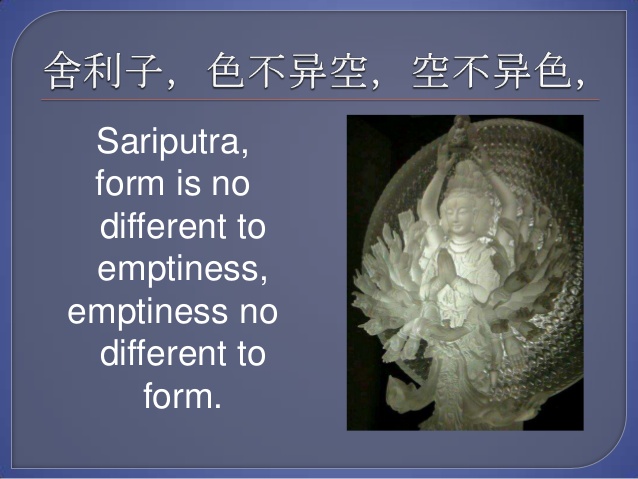
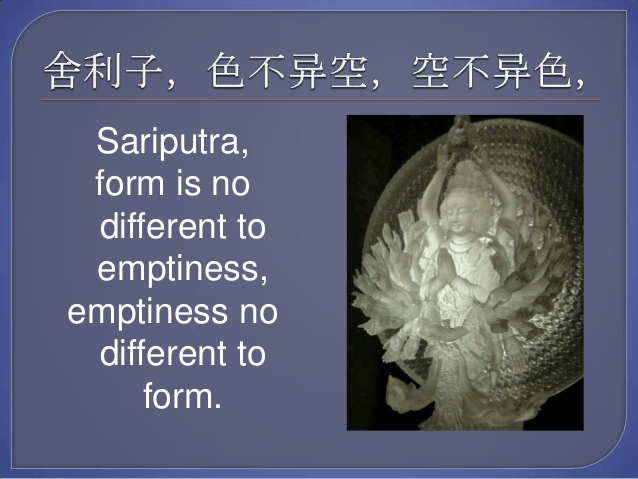
Everything is not right, and everything is not wrong. However, everything can be useful in one way and not useful in another way. If you don’t put a limit on yourself, you can use everything and you can maximize your potential. The greatest “something” is not necessarily good or bad. Don’t love “something”, and don’t hate “something” either. The greatest thing is nothingness. Just because we can’t see it, we are oblivious about its existence. Forms (色) and emptiness (空) are inseparable. They are different parts of a great “elephant”. We should embrace everything rather than cutting the “elephant” into separate parts and then hold on to one part according to our whims and fancies. That “elephant” which cannot be described with words is like the God. Positives and negatives are necessarily coexistence; contradictions do not make them mutually exclusive but attracted to each other and bind together tightly.

FEAR AND ANGER

Table-of-Content

People who believe they are superior are always looking down at the world. The world looks ugly to them, and that makes them angry. A person is angry because he has a lot of fear. He isn’t brave. He fears his wealth is not enough; he fears he doesn’t have enough time; he fears his project is not making good progress; he fears his workers are not putting in 100% of their energy to make money for him; he fears his employees are cheating and stealing his money; he fears his spouse is unfaithful; he fears he is not respected; he fears his reputation is tainted; he fears his favorite fruit becomes so expensive that he cannot afford to buy and eat it; he fears people become so different (LGBT, for example) from him and make him wants to throw up; he fears the society will become chaotic and his personal safety is not 100% guaranteed; he fears the Heaven is going to fall down soon.

Confucius said: “A person who looks serious and fierce outside, but actually feels fearful inside, is like a little man. Isn’t he similar to a thief who breaks the wall, careful but feeling afraid of getting caught?” (色厉而内荏,譬诸小人,其犹穿窬之盗也与?) “A real gentleman always looks enthusiastic (fun, friendly, sociable and emotionally expressive). A little man always looks worry and angry.” (君子坦荡荡, 小人长戚戚。) A big man has a big capacity to tolerate differences (大人有大量); a little man only wants everybody to tolerate him, or respect his sensitivity and never enrage him. A big man will gives way (谦让) to others; a little man only wants everybody to give way to him. You don’t have to be rich to be a big man. In fact, rich people are often little men; they always want something from everybody instead of giving and forgiving. People who cannot give way to others often have a lot of fear; the fear comes from desires in that they are GREEDY (贪) to get something, or HATE (嗔) to see/experience something, or having delusion (痴) about something (such as seeing certain exotic hobbies as highly desirable and other things as inauspicious), therefore fear of losing things like face, fame, money, time, energy, beautiful things, delicious foods/drinks, or lavish lifestyle.

Practicing compassion and righteousness is supposed to be for self-improvement and self-interest. Naming and shaming (耻) someone for the so-called “improper behaviors” is a tactic for “collective interest” of having a set of uniform codes of good manners. Shaming someone is an act of coercion or bullying. Feeling ashamed for having “improper behaviors” (but doesn’t infringe on the rights and liberty of anyone) means falling into the traps of the bullies and becomes a victim of the uniform codes of good manners. It is foolish to feel ashamed for being different. The greatest prison people live in is the fear of what other people think.

Let go of yourself. Don’t put on any responsibility on your shoulder. What you may have come to accept as your responsibility as parent, son/daughter, spouse, employee, employer, citizen and leader is actually imposed on you through “education”, or brainwashing to be exact. You don’t have to comply with any codes of morals and ethics. You can free yourself. But you may want to be loved. And the only way to be loved is to be generous. Generous in giving (money or care) means you give as you are happy to give, rather than feeling you are obligated to give, like a debt and the implied responsibility to repay. You need to build up your capacity to give loves (like the capacity to give money). You will then be “rich” and able to give without hesitation. You will have no fear and no guilt if you have no expectation for any outcome. Like planting a seed, you cannot expect to get good fruit, although you are hopeful. Apart from watering and fertilizing, the Heaven (i.e. weather) and Earth (i.e. soil and pests), and the Dao (i.e. method and timing), also play important roles in determining the outcomes. Don’t feel disappointed if your hope doesn’t come true; it wasn’t your fault or responsibility. It is just a dream.

People who tell you to be selfless are selfish. They don’t love you but someone else. They want you to have no self, so that you sacrifice yourself for someone else. If you listen to them, you don’t love yourself or you love yourself less, who else will love you? Of course, you can choose to be selfless for your greatest selfishness, but not on anybody’s terms.

Confucius said: “Intelligent individuals have a fondness for water, and compassionate individuals have a fondness for mountain. Intelligent individuals know how to adapt to changes (like water reshapes to its environment), and compassionate individuals like to keep quiet (like mountain). Intelligent individuals are happy, and compassionate people will have long life.” (知者乐水,仁者乐山;知者动,仁者静;知者乐,仁者寿。) “A person who is calm, loving, tolerant, and quiet will live long.” (方苞: “气之温和者寿,质之慈良者寿,量之宽宏者寿,言之简默者寿。故仁者寿。”)

ALL MANMADE DISTINCTIONS ARE FALSE

Table-of-Content

Lao Zi said: “When the world adopts a common standard for beautiful, that’s ugly. When the world adopts a common standard of virtue, it is undesirable. Material and nonmaterial exist together. The word difficult existed because there are relatively easier tasks. Long and short are the results of comparison. High is relative compared to low. Sounds of different tones and volume levels are needed to make music. Something is in front because there is another thing following at the back. Naturally, one cannot exist without the other.” (天下皆知美之为美,斯恶已。皆知善之为善,斯不善已。有无相生,难易相成,长短相形,高下相倾,音声相和,前后相随。恒也。) You make the comparisons because of the desire to create distinctions between various things. You can use the manmade distinctions as temporary measures for analysis purposes, but you must not cling on to the measurements (of beautiful/ugly, good/bad, easy/difficult, long/short, high/low, etc.) lest you become bias to certain misconception or stereotype. “Easy” is only easy to some people; it can be “difficult” to other people. “Difficult” is only difficult now; the same problem can become “easy” at another time when you are older and wiser. Similarly, “beautiful” is not always beautiful; it depends on time and space. “Good” is not always good; it depends on time and space. If the misconception or stereotype of “good” and “bad” becomes ingrained in your mind, you may become arrogant and misjudge someone or some situations.


A flag is waving in the air. A man says: “The flag is restless.” Another man refuted and says: “No. It is the air that is restless.” The two then started debating. The fact is, it is the heart that is restless, not the flag or the air. If the heart is calm, both men would do better things rather than initiating the desire to distinguish whether the flag or the air is restless. Instead, both men try to create a “hard fact” in their minds, which is simply what they wish to be true; they corrupt their minds to become rigid and inflexible, with a set of rules which is considered right and another set considered wrong. You should rise above the preconditioning of right and wrong to see the truth more clearly.


Su Dong Po (苏东坡) practiced meditation together with a monk. One day, he asked the monk: “How do I look when I am meditating?” The monk said: “You look like the Buddha.” Su Dong Po was very happy. He said: “Thank you. But I think your meditation posture looks like pile of shit. Ha Ha Ha!” The monk laughed for the joke. Later, Su Dong Po told his sister about the incident. He said: “I won!” The sister said: “You have lost pathetically. The monk said you looked like the Buddha because his heart was pure and he only thought of the Buddha. You said the monk looks like a pile of shit because your heart was impure and you only thought of a pile of shit.”


Most people love Confucius but at the same time dislike Confucians. Confucius has an image of being a compassionate and loving old teacher who tried very hard to bring world peace in the chaotic era of the Warring States period. He persevered to preach his belief in compassion and righteousness although he knew he would fail. Confucians on the other hand give people the impression of nasty old men who always put up an angry face like the fighting cock. Confucius advocated compassion and righteousness as the qualities for individuals to improve themselves. The incentive for individuals to attain the qualities is to have the desired inner beauty. The individuals can then be recruited by the king as government ministers. Confucians on the other hand view compassion and righteousness as precious things to possess, and they want everybody to believe that they have the qualities. To create that kind of illusion, they will let everybody knows that they hate people who are lack of compassion and righteousness, as if they don’t have lacking in those qualities. In other words, they are bluffing. They further coerce everybody to show compassion and righteousness, hence the fighting cock look which upset everybody. They are intolerant of differences and diversity. They are big bullies, which is the opposite of the truly compassionate and loving old teacher that they try to emulate; so ironically.


Xi Shi (西施) was a beautiful girl. Even when she was sick, from the way she put her hand on her chest and furrowing her eyebrows, she still looked beautiful. There was an ugly girl in her neighbor. She emulated the way Xi Shi put her hand on her chest and furrowing her eyebrows. When people see her, they all run away. Confucians may have some artificial compassion, but the way they look without the essence (得其形而不得其神) will make people run away from them.


Confucius said: “If a person in high position insists he is right and everybody must follow what he said, and he demands everybody to act decisively according to his instructions, he is just a little man.” (言必信,行必果,经经然小人哉!) Confucians want to promote Confucianism, but their misconception and actions often create damages to the school of thoughts. When you demand your children to obey your instructions, for their “own good” of course, you are acting like you are so sure you are right; you are being arrogant and judgmental. If you are always mindful that you may be wrong, and what you think is right may be the opposite, you will be able to show more humility. You will not be too worried about your children’s action or inaction.


The actions of believers in the name of their religion often create damages to their religion rather than expanding the influence of the religion. Yet they think they know the truth and they are doing the right things. They coerce everybody to follow their lead and act decisively according to their instructions.


Words that bring happiness to people don’t have to be delivered by coercion; and it doesn’t matter who said the words. Believing that God is benevolent, to us at least, is always the first reason we make friend with God. Unfortunately, we sometime get carried away and believe in words that were put into God’s mouth and carry out malevolent acts on people of other “tribes”; including different “tribes” of the same religion. Every religion was a religion of peace, until it is not. It isn’t God’s fault; it is the fault of “tribe leaders”. Religions are not bad things; they often bring more good than bad.


The biggest barrier to our understanding of the truth is our mental preconditioning. When we try to find the reasons for certain issue, we try to understand the truth through the lens of our personal past experiences, our world view, our belief about morality and what we wish to be true. And this put us in the position where we are more interested in picking and choosing those parts of reality that fit with our world view and discarding those that do not. We are arrogant and judgmental. We choose to be imprisoned in years of misconceptions and stereotypes.

BULLIES ARE CREATED BY BULLIES

Table-of-Content

Another important advocacy of Confucius is good manners (礼) and feeling ashamed (恥) for improper behaviors. Confucius said: “Educating the people to follow the government instructions, and using laws and punishments to restrain the people’s behaviors, the result is the people will try to avoid punishments but not feeling ashamed to break the laws. Educating the people to appreciate the benevolence of the government, using codes of good manners to regulate the peoples’ behaviors, the result is the people will feel ashamed for having bad manners and therefore self-regulate to have good conducts.” (道之以政,齐之以刑,民免而无耻;道之以德,齐之以礼,有耻且格。) The intention is good, as far as the collective interest is concerned. People who agree with Collectivism principle will accept the practice of giving a group priority over each individual in it. However, to people who prefer Individualism, it is unacceptable to brainwash the people with artificial/man made codes of good manners (like programming the peoples’ minds with computer codes) and make individuals feel ashamed of themselves for something that they shouldn’t have. The codes of good manners tend to unify the peoples’ behaviors. It conditions the people to idolize good manners and hate the so-called bad manners that are not really bad. It is similar to having a common standard for beautiful, and people are then conditioned to idolize beautiful looks and hate ugly looks. People become intolerant of differences and diversity. In other words, the people are infected with allergy; anything that doesn’t look beautiful in their opinion is considered ugly and it can cause people to feel unable to accept or tolerate it. People start to find joy in bullying anyone who dresses differently, eats differently, interacts differently, behaves differently, having different opinions, or anyone who doesn’t want to follow “rules” in general. They start to find ways to be mean to innocent individuals. The bullying may be in the form of criticizing, making unsolicited suggestions, name calling, insults, teasing, intimidation, homophobic or racist remarks, verbal abuse, isolation, badmouthing, to physical aggression. In other words, bullies are usually created by other bullies. The intolerance of differences shown by the schools and parents make the children intolerant of differences; this is a result of leadership by examples. They normalize bullying, so they don’t actually know they are bullying. There are so many religious fighters who cannot tolerate the existence of people with different religions; hence, the discrimination and killing of innocent people, locally and abroad. “Men never commit evil so fully and joyfully as when they do it for religious convictions.” The fighters are missionary men and women from the “moral high ground” (at least they think they are), therefore intolerant of people from the “moral low land” or “second-class humans”. They are not uneducated hooligans. They do bad things for “good” reasons with “good” intentions; and they are so “selfless” to sacrifice themselves for the “good” cause. The ends always find “good” reasons to justify the means.


Tolerance is the power to forgive (恕). If the schools and parents are powerless to forgive, how can they expect the children to have tolerance? One day, Confucius told his disciple, Zeng Shen: “Shen, my philosophies can all be related by one fundamental principle.” Zeng Shen replied: “Understood.” After Confucius left, the other disciples asked Zeng Shen: “What is the meaning?” Zeng Shen said: “The philosophies of our teacher can all be related to Honesty and Forgiveness.” (子曰: “参乎,吾道一以贯之。” 曾子曰: “唯。” 子出,门人问曰: “何谓也?” 曾子曰: “夫子之道,忠恕而已矣。”) Honesty (忠) means truly coming from the heart (忠于事,忠于言,忠于人,忠于己). Loyalty is an act of dishonesty if it doesn’t come from the heart; although some people like it that way regardless. When you are honest, to yourself and to others, everything you said comes from your heart. Nothing is artificial or pretentious, although you may not be right all the time. You will be honest to the king as much as being honest to the people. You will be honest in doing your job, and never make any promise that you don’t intend to keep. You will be honest to yourself, be who you are and not pretend to be someone you are not. If your heart is full of the capacity to forgive, you will be able to tolerate differences and not insist on conformance, although you like people to show good manners.


Another day, Confucius told another disciple, Zi Gong: “Ci, do you think I am someone who learns a lot and becomes knowledgeable by memorizing everything that I’ve learnt?” Zi Gong replied: “I think so. Isn’t it true?” Confucius said: “Not really. I have one fundamental principle to relate and bind together all my knowledge.” (子曰: “赐也,女以予为多学而识之者与?” 对曰: “然,非与?” 曰: “非也!予一以贯之。”) Anything that has nothing to do with Honesty and Forgiveness isn’t Confucianism even if Confucians say it is. You don’t have to become knowledgeable by memorizing a lot of thing that you’ve learnt. You just need to let Honesty and Forgiveness guide you in your words and actions, and in making decisions to move or to stop (言行举止). Confucius said: “Compassion includes being respectful, forgiving, truthful, hardworking, and benevolent. Being respectful to everybody will avoid being humiliated. Being forgiving will be loved by everybody. Being truthful will be trusted by everybody. Being hardworking will bring success. Being benevolent (i.e. showing the people how they can benefit themselves by following certain techniques or methods) will be able to influence others to work for common good.” (恭、宽、信、敏、惠。恭则不侮,宽则得众,信则人任焉,敏则有功,惠则足以使人。)


Some children who are bullied by the schools, parents, and peers may become another kind of bullies. Because they are different (don’t like to follow “rules” but they are not violent), and they refuse to change their behaviors in the so-call “socialization” or complying with the norms, they become very defensive. They feel threatened by people who are “normal” or comply with the norms. They become intolerant of “normal” people. As time goes, the allergic condition becomes acute and they may attack first upon encountering “normal” people, like snakes biting humans who inadvertently walk by. They may think that they have to choose between being the bullies or the victims, and there is no third choice. They think “good people are bullied by people, non-violent horses are ridden by people” (人善被人欺,马善被人骑).


Do you feel sad to ask: “Where is the love?” Can you feel the love? There is a shortage of unconditional love (慈), but people mistaken it as a shortage of compassion (仁) and righteousness (义); hence they call for everybody to show compassion and righteousness, instead of love. A person with a lot of love will not be an angry person. It is good for him and everybody around him.


When Confucius was the Justice Minister of Lu state, a father lodged a complaint that his son had no filial piety (孝). Confucius arrested the son, but did not make any judgment or hand out any sentence for three months. In the end, the father decided to retract the complaint, and Confucius freed the son. A minister was unhappy with the way Confucius handled the case. He said: “Confucius lied to me. He told me that filial piety is the most important fundamental principle in governing a country. Now, there is a case where he can kill one person in order to set an example which will deter other people from being rebellious to their parents. Instead of showing justice is served, he frees the offender.” When Confucius heard that, he said: “When the forefathers made a law, they would clearly explain the objectives of the law, and they abided by the law themselves. If some people break the law, the leaders would praise the rest of the people who follow the law, so that all the people would slowly be influenced to follow the law. If some people still break the law, the leaders would remove the unimportant parts of the law so that it became simplified for easy implementation. After using this practice for a few years, the people would accept and abide by the law. If a few individuals still break the law, then the punishment can be handed out. Everybody would then know why the offenders were punished.” Not educating the people but punish them when they break the law; this is an act of punishing innocent people (不教其民,而听其狱,杀不辜也。). The people are innocent if they don’t know anything about the law. The law has deterrence power but you can choose not to use them to scare the people; you can choose not to execute the punishment (i.e. catch the offenders, educate them, and then release them) (威厉而不试,刑错而不用). Honesty (忠) and Forgiveness (恕) are more fundamental than filial piety (孝); without which filial piety is faked. Law and benevolence (in term of forgiveness) are like the two wings of a bird; both must work together to bring effective results. Some people refer to these as carrot and cane. The cane is mainly used to scare the children; you don’t have to actually whip them. It would be even better if you don’t even scare them with the cane; so that they do goods not due to fear of punishment. It is best to teach them to love each other than to punish them when they break a rule innocently. Children are usually innocent, not tainted by adult’s false definitions of right and wrong. They act naturally without thinking too much; they don’t always know how to relate what they do and the rules set by adults. Even adults have difficulty relating what they do and the puzzling laws of the government. The real Confucianism emphasizes teaching the people to have honesty and forgiveness, and teaching the people to have good manners, using leadership by example, is far better than making laws and punishing the offenders (德礼优于政刑,德礼为主、政刑为辅).


What happens today is much deviated from the forefathers’ way. The education system confuses the people (i.e. teaching the children to be intolerant of differences, to have a strong selfish desire for money aka success, to the negation of everything else), and the government makes so many complex laws, making the people so bewilder and unable to follow. The government then punishes the people. That is why the law enforcements are intensified but the offences are still overwhelming. (今之世则不然,乱其教,繁其刑,其民迷惑而堕焉。则从而制之,是以刑弥繁而邪不胜。)


A system which emphasizes rule-of-law (法家) and justice (义) basically focuses on hate rather than love. It advocates hatred toward people who break the law, instead of forgiving or giving the offenders a chance to repent. The use of force by the government or the schools is a form of violence. The system advocates the use of violence against “violence”. An eye for an eye only ends up making the world blind. A three-foot ridge is not tall but steep; therefore, even an empty cart cannot cross over. A fully loaded cart can easily climb up a hundred-foot hill because the slope is gradual. (三尺之岸而虚车不能登也,百仞之山任负车登焉,何则?陵迟故也。) It is a steep order for expecting the children to comply with all kinds of silly rules within a short period of time without proper education. Confucius taught his disciples to handle hostility with a diplomatic manner (以直报怨) to get their message across, using reasons and compassion to convince people to change without damaging the relationship. Lao Zi taught us to handle hostility with love and kindness (以德报怨). Treat kindness with kindness too. There is no need to show different faces to kind friends and hostile people, because being kind is not about trying to get people to reciprocate; it is about self-conservation, of being who you are, a giant human with giant capacity (大人大量) to forgive. It is probably more effective than diplomatic manner in influencing hostile people to become more polite and friendly.


If someone is too sensitive and easily offended and, without second thought, he would use personal force or the government law to hammer obedience into anyone who offended him, it would reflect badly on the level of civilization. Truly civilized people (华夏) despise the use of violence, either at the personal level or the government level. Only barbarians (夷狄) like to use violence. Someone from a civilized nation but exhibit barbaric behaviors should be treated as a barbarian (夷狄而华夏者 则华夏之 华夏而夷狄者 则夷狄之).